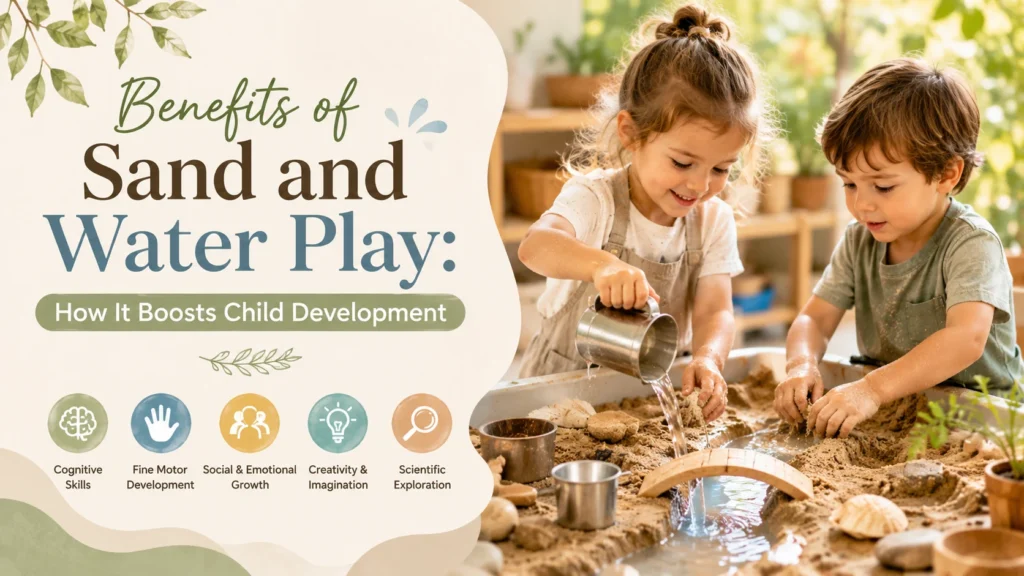
Sand and water play often catches children’s attention before any adult explains what to do. The materials are familiar, easy to touch, and full of small surprises. This natural curiosity is why sand and water play has become such a valued part of early childhood learning. To understand its role in children’s development, it helps to first look at what sand and water play really means.
What Is Sand and Water Play?
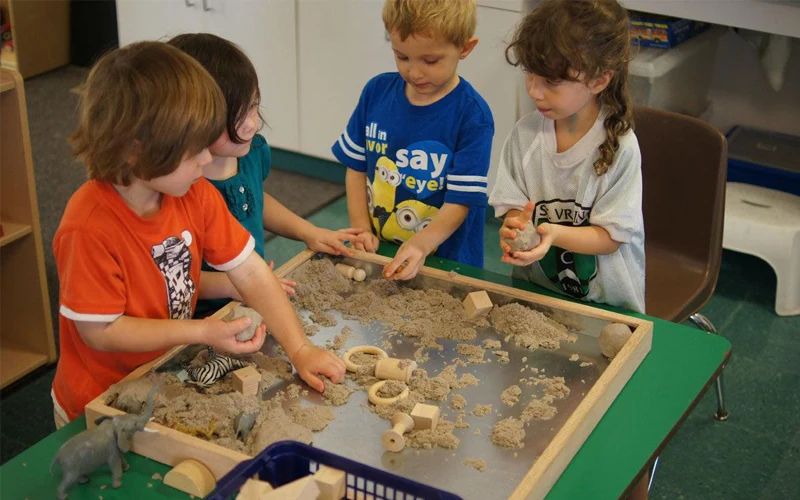
In early childhood education classrooms, the sand and water table is undoubtedly one of the two most popular areas. Sand and water play is one of the simplest—yet most meaningful and impactful—forms of play during the early years. It offers children a wonderful opportunity to utilize their hands, senses, imagination, and curiosity to explore the natural materials found in the world around them.
Children’s play often begins with simple actions: for instance, filling a small bucket with sand, deciding to add a little water, stirring the mixture with a stick, burying a toy animal, or constructing an imaginative beach scene. It is precisely this freedom that endows sand and water play with such immense power. It allows children to follow their own ideas, experiment with various possibilities, and remain deeply engaged and focused throughout the process.
The Benefits of Sand and Water Play
Children are constantly learning and developing through play. Playing with sand offers numerous benefits for preschoolers. The advantages of sand and water play are evident across many facets of early childhood development. The following sections outline how these activities foster growth in key developmental domains.
Sensory Exploration
Sand and water play gives children rich sensory input through touch, movement, and body awareness. It supports tactile perception as children feel dry sand, wet sand, cool water, and muddy textures with their hands and fingers. It also strengthens the vestibular sense when children bend, squat, reach, carry buckets, and move around the play area. At the same time, actions such as digging, scooping, pouring, squeezing sponges, and pressing sand into molds support proprioception, helping children understand body position and control how much force they use. These sensory experiences build coordination, focus, and self-regulation.
Concepts mathématiques précoces
Sand and water play naturally introduces early mathematical concepts without the need for formal instruction. Children compare full and empty buckets, count how many scoops of sand they have taken, measure water levels in cups, and observe which containers hold more or less volume. Through hands-on, practical experiences, they begin to understand concepts such as volume, capacity, size, weight, depth, and quantity.
Concepts scientifiques
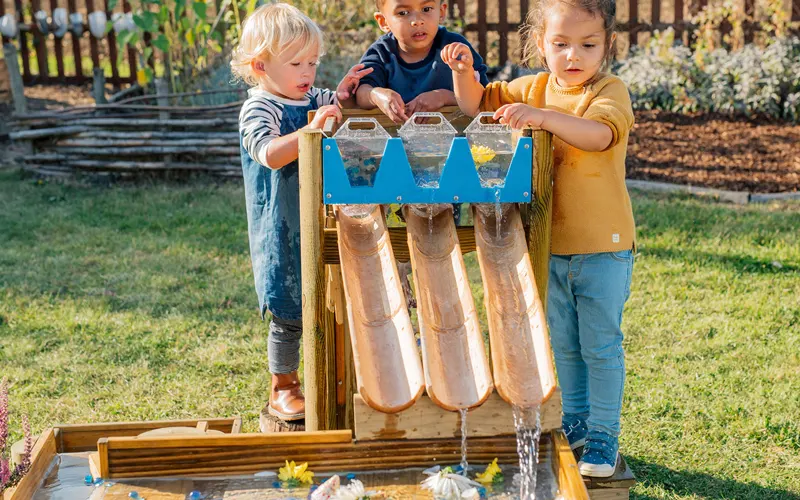
Sand and water play encourages children to think like little scientists. They observe what happens when water is poured onto dry sand, test which objects float or sink, and explore how water flows through pipes, funnels, and channels. They may discover that wet sand holds its shape more easily than dry sand, or that certain materials absorb water while others do not. These moments help children explore cause-and-effect relationships, gravity, absorption, erosion, states of matter, and the properties of various materials.
Créativité
One of the most delightful benefits of sand and water play is its remarkable ability to spark children’s imaginations. In the eyes of a child, a simple pile of sand can instantly transform into a castle, a mountain peak, a bakery, a construction site, or even a dinosaur park. This imaginative style of play helps foster flexible thinking, storytelling abilities, problem-solving skills, and the capacity for self-expression.
Development of Fine Motor Skills
Sand and water play helps exercise and strengthen the small muscle groups in children’s hands, fingers, and wrists. Whether scooping sand with a spoon, squeezing a sponge, pouring water, using a dropper, digging with a shovel, or molding wet sand into shapes—all these actions require fine motor control and coordination. Because these activities are so engaging and fun, children naturally and repeatedly practice these crucial motricité while they play.
Connecting with Nature
Sand and water play offers children a wonderful opportunity to engage meaningfully with natural materials. As children play outdoors amidst sand, water, stones, leaves, soil, seashells—and even sunshine and raindrops—they begin to observe the world around them with greater attention to detail. This direct contact with nature sparks their curiosity, fosters a sense of care for the environment, and teaches them to appreciate the joys of outdoor play. Furthermore, it provides children with a chance to step away—at least temporarily—from electronic screens and structured indoor activities, allowing them to enjoy some time in nature that is both physically and mentally beneficial.
Emotional Well-being
For young children, sand and water play possesses a powerful calming and soothing effect. Water play, in particular—thanks to the gentle movement of the water and its soft, trickling sounds—often evokes a uniquely soothing and therapeutic sensation for children. Additionally, sand and water play serves as a medium for emotional expression; through inventing imaginary stories, engaging in independent exploration, or participating in cooperative play with peers, children can use these activities to express and process their inner feelings. As they independently make choices, solve minor in-game puzzles, and witness firsthand their imaginative ideas gradually take shape, their self-confidence, patience, and sense of control over their own actions are significantly enhanced.
How Can Teachers Encourage Sand and Water Play in the Classroom?
Teachers can encourage sand and water play by creating a safe, inviting, and purposeful environment where children feel free to explore. The goal is not to control every action, but to provide the right materials, guidance, and space so children can discover, experiment, and learn through hands-on play.
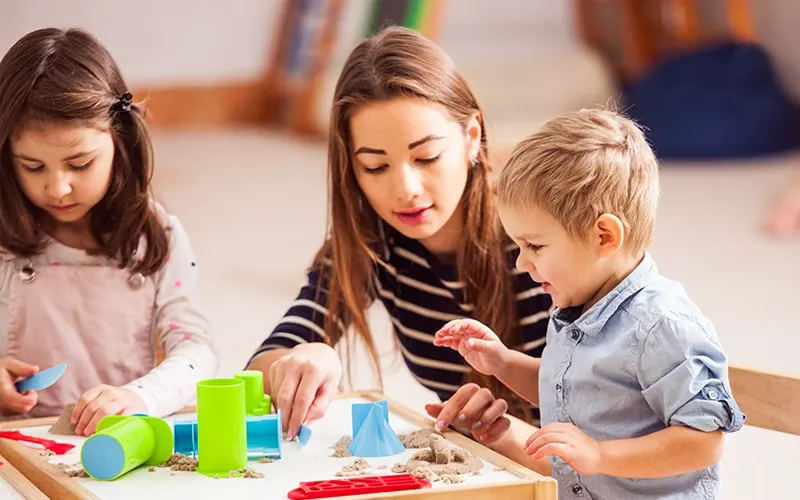
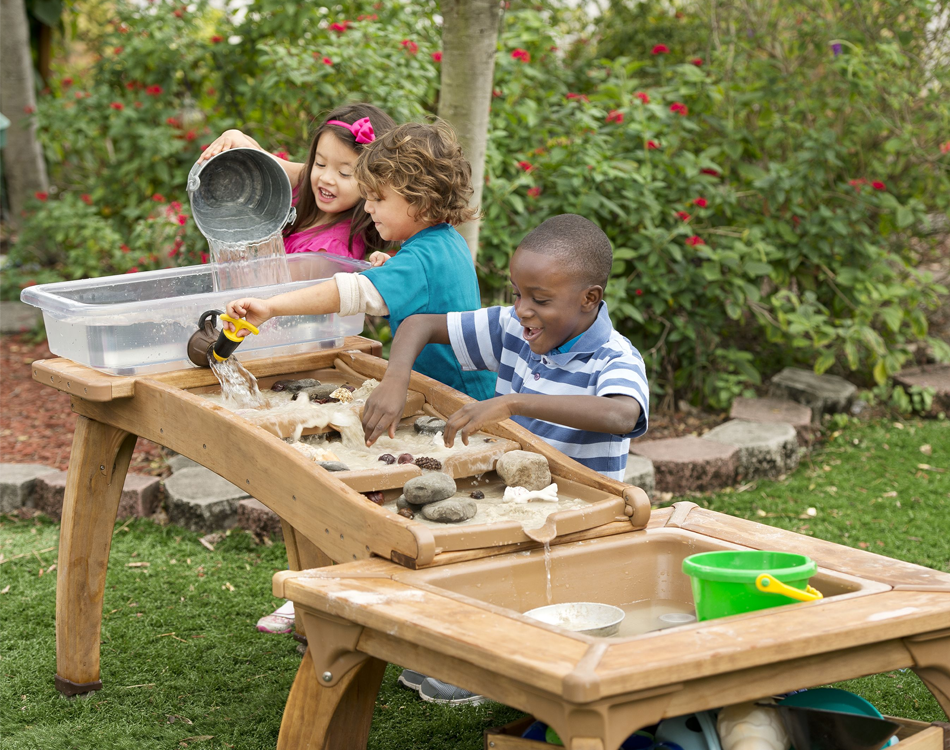
First, teachers can prepare an accessible sand and water area with clear boundaries. A water table, sand tray, outdoor sandpit, or sensory bin should be placed where children can move comfortably and clean up easily. Simple tools such as cups, funnels, scoops, buckets, sieves, sponges, toy animals, shells, stones, and tubes can make the area more engaging without overwhelming children.
Second, teachers should use open-ended questions to extend children’s thinking. Instead of giving direct answers, they can ask, “What do you think will happen if we add more water?” “Why did this object sink?” or “How can we make the sandcastle stronger?” These questions help children observe, predict, problem-solve, and explain their ideas.
Third, teachers can encourage cooperation and language development during play. Sand and water areas naturally invite children to share tools, take turns, build together, negotiate roles, and describe what they are doing. Teachers can model useful words such as full, empty, heavy, light, float, sink, rough, smooth, wet, dry, more, less, and deeper.
Finally, teachers should set simple safety and clean-up rules. Children can learn to keep sand low, walk near water, use tools gently, wash hands after play, and help return materials to the right place. With consistent routines, sand and water play becomes both joyful and manageable in the classroom.
7 Sand and Water Play Activities for Kids
1. Expérience du « couler ou flotter »
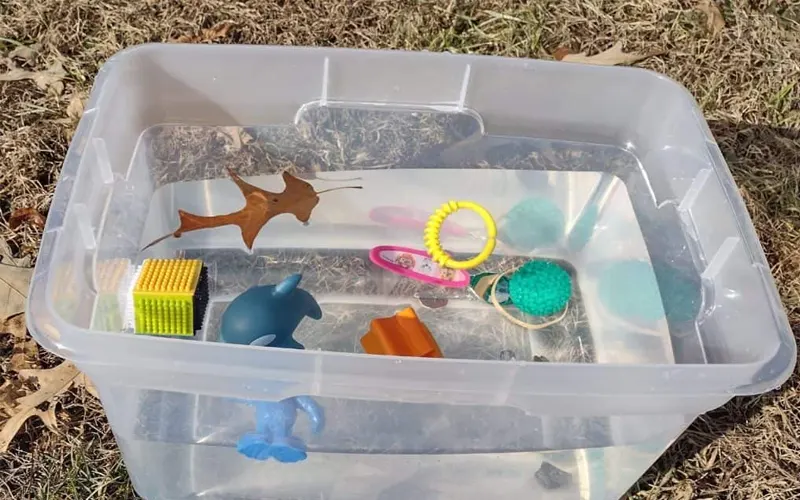
Prepare a shallow tub of water and a small collection of safe objects, such as leaves, stones, toy boats, corks, shells, spoons, and blocks. Before placing each object in the water, ask children to guess whether it will sink or float. After testing, encourage them to describe what they notice. This activity introduces early science concepts such as prediction, observation, weight, material, and buoyancy.
2. Sandcastle Building
Give children wet sand, buckets, cups, scoops, and natural decorations such as shells, leaves, or small stones. Children can build castles, towers, roads, bridges, or pretend towns. As they shape and rebuild their structures, they develop creativity, problem-solving, spatial awareness, and fine motor control. Teachers can extend the activity by asking, “What makes the tower stronger?” or “Why did this part fall down?”
3. Measuring and Pouring Station
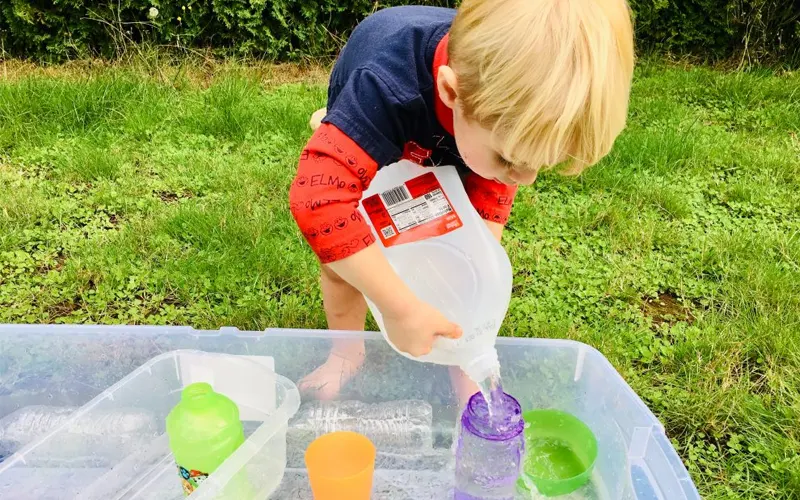
Set up water, sand, measuring cups, spoons, funnels, bottles, and containers of different sizes. Children can fill, empty, compare, and transfer materials from one container to another. This activity supports early math learning by helping children explore volume, capacity, more and less, full and empty, heavy and light. It also builds hand-eye coordination through repeated pouring and scooping.
4. Treasure Hunt in the Sand
Hide small safe objects in a sand tray, such as shells, toy animals, letter stones, number cards, or picture pieces. Children can dig, search, count, name, sort, or match what they find. This activity encourages sensory exploration, attention, fine motor skills, early literacy, and early numeracy. For younger children, use larger objects to reduce choking risks.
5. Mini River Building
Invite children to create rivers, lakes, or canals in wet sand using cups of water, sticks, stones, leaves, and small toy boats. They can dig channels, pour water, observe how it flows, and adjust the path when the water changes direction. This activity introduces basic science and engineering ideas, including gravity, flow, erosion, cause and effect, and problem-solving.
6. Mud Kitchen Play
Set up a simple mud kitchen with bowls, spoons, cups, pots, water, sand, leaves, flowers, and small stones. Children can pretend to cook soup, bake cakes, mix ingredients, or serve meals to friends. This activity supports imaginative play, social interaction, language development, and creativity. It also gives children a chance to explore texture, mixing, measurement, and cause and effect in a playful way.
7. Animal Habitat Creation
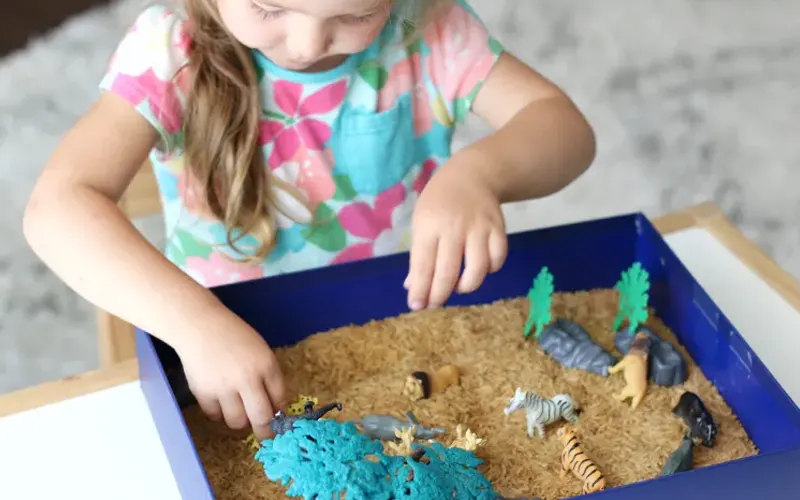
Provide wet sand, water, toy animals, stones, sticks, leaves, and shells. Ask children to create habitats such as beaches, ponds, farms, jungles, or dinosaur lands. They can build shelters, rivers, caves, nests, or feeding areas for the animals. This activity encourages storytelling, environmental awareness, creativity, and problem-solving. It also helps children connect play with early science ideas about animals, homes, and natural environments.
Questions fréquemment posées
What equipment do I need for sand and water play at home or school?
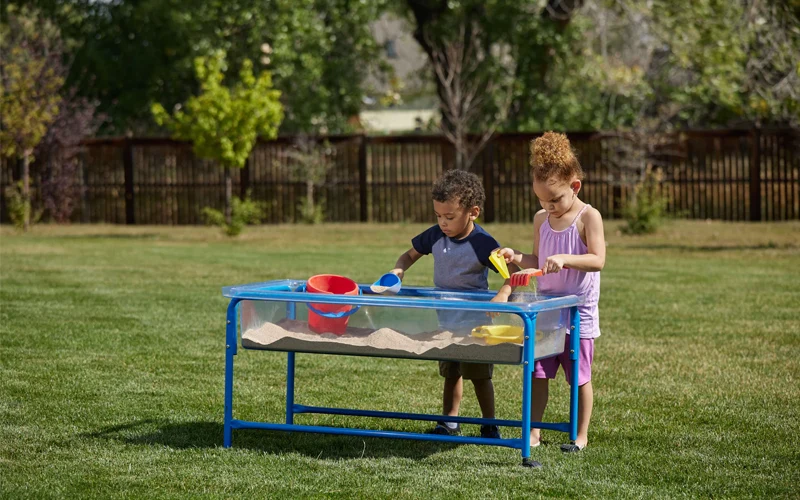
You can use a double-sided sand and water table, a small plastic paddling pool, or a simple waterproof storage bin. Add tools such as measuring cups, funnels, sieves, scoops, toy boats, sponges, and containers to make the play area more engaging.
How can I make sand play more interesting for children?
Use wet sand for building, molding, and shaping, as it holds its form better than dry sand. You can also add natural materials such as sticks, shells, stones, and leaves, or use letter molds and cookie cutters to connect sand play with early literacy, shapes, and geometry.
How do you keep sand play safe for children?
Check the sand area before play to make sure it is clean and free from glass, rubbish, animal waste, or other unsafe objects. Remind children not to throw sand, and always supervise them while they play. If you have a sandbox at home, cover it with a lid after use to keep animals and insects out. After sand play, children should wash their hands thoroughly with soap and water.
Explore TOP Montessoris Sand and Water Tables
Sand and water play gives children a simple but powerful way to explore, create, think, move, and express themselves. From sensory exploration and early math concepts to science discovery, fine motor development, nature connection, and emotional well-being, the benefits of sand and water play make it an important part of early childhood learning.
Ready to create a richer hands-on learning space for your child or classroom? Explore TOP Montessoris’ carefully designed sand and water table collection and discover products made to support sensory play, outdoor discovery, and joyful early years learning.
Choose durable, child-friendly sand and water tables designed for preschools, daycare centers, and early years classrooms.
 View Sand and Water Tables





 FR
FR  EN
EN  AR
AR  IT
IT  DE
DE  ES
ES  TH
TH  JA
JA  TR
TR