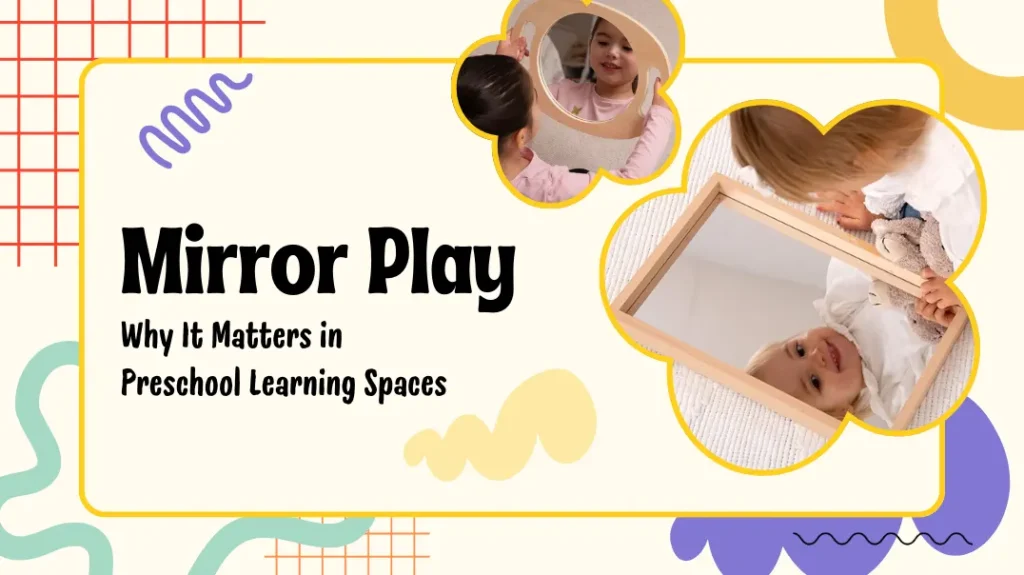
In many preschool learning spaces, mirror play gets treated like a nice-to-have, a small detail on the wall that looks good in photos. But in a real classroom, the mirror is doing something more practical. It gives children instant feedback on their body, facial expression, movement, and the way they interact with objects. That feedback helps them adjust without adult interruption, which is exactly what strong early learning environments try to protect.
What makes mirror play worth attention is not the activity ideas. It is the developmental function. A mirror quietly supports self awareness, language for emotions, coordination, and social observation, especially in the years when children are learning who they are in relation to others. When mirrors are placed with intention, they can make routines calmer, transitions smoother, and play episodes more sustained, because children stay engaged longer and self correct more often.
This article explains why mirror play matters in preschool learning spaces, where it works best, and what to consider when choosing and installing classroom mirrors for daily use. If you are planning a new room, upgrading an existing layout, or sourcing mirrors as part of a full classroom package, these are the details that prevent mistakes and make the mirror a real teaching support.
What Is Mirror Play in Preschool Settings
In preschool environments, mirror play is not about children simply looking at themselves. It refers to intentional mirror use within learning spaces where children can observe their own movements, expressions, and actions while playing, working, or interacting with materials. The mirror becomes part of the environment rather than a separate activity or teaching tool.
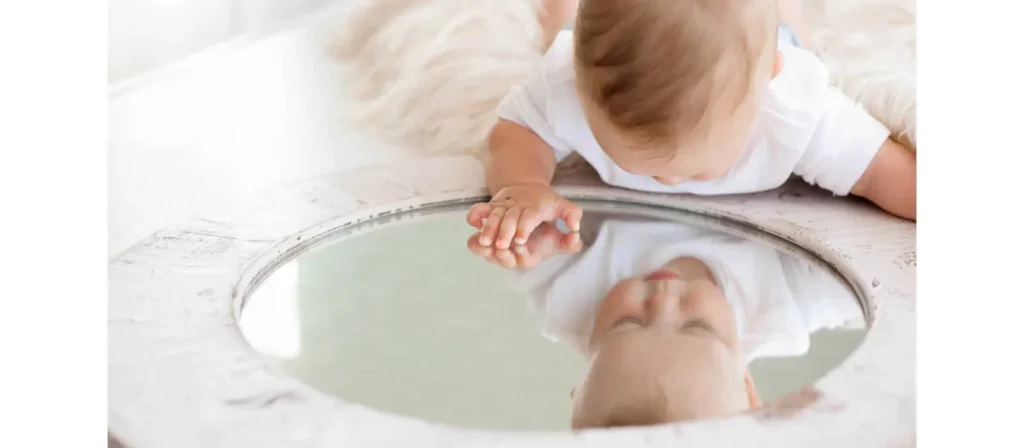
This is different from decorative mirrors or mirrors placed only at adult height. In early learning settings, mirror play happens when mirrors are positioned at child level and integrated into daily routines. Children may notice how their face changes when they speak, how their body moves during climbing or balancing, or how objects look when held close to the mirror. These moments are self directed and do not require instruction to be effective.
In Montessori and similar child centered approaches, mirror play supports independent discovery. The mirror acts as a quiet observer that gives immediate visual feedback, allowing children to adjust posture, movement, or expression on their own. Over time, this strengthens body awareness and self regulation without adding pressure or overstimulation to the classroom.
How Preschool Mirror Play Differs From Decorative or Home Mirrors
In preschool settings, mirrors are part of the learning environment rather than visual decoration. Unlike home or decorative mirrors, classroom mirrors are designed for child-level interaction, daily use, and developmental support. Their purpose is not appearance, but safety, accessibility, and how effectively they support independent exploration during play and routines.
| Aspect | Preschool Mirror Play | Decorative / Home Mirrors |
|---|---|---|
| Primary purpose | Support learning, self-awareness, and movement observation | Visual decoration or personal grooming |
| Installation height | Positioned at child eye level | Installed for adult use |
| Material choice | Acrylic or shatter-resistant materials | Glass is common |
| Safety design | Rounded edges, secure mounting | Limited safety considerations |
| Role in daily use | Integrated into play, routines, and learning areas | Used occasionally, not activity-based |
| Interaction style | Self-directed, hands-on exploration | Passive or adult-guided |
Why Mirror Play Is Widely Used in Montessori and Early Education
In Montessori and early education environments, mirror play aligns naturally with the idea of a prepared environment. Children are encouraged to observe, adjust, and learn through their own actions rather than constant adult correction. A mirror provides immediate, neutral feedback without interrupting concentration. When children can see their movements, posture, or facial expressions, they gain awareness through observation instead of instruction. This supports independence and self regulation, which are central goals in child centered learning approaches.
Mirror play is also widely used because it supports learning across multiple developmental areas without requiring complex materials or structured activities. In early education settings, teachers value tools that remain relevant throughout the day, from free play to transitions and movement activities. Mirrors allow children to explore identity, social cues, and physical coordination at their own pace. This flexibility makes mirror play suitable for mixed age classrooms and adaptable to different teaching philosophies beyond Montessori, while still maintaining a calm and purposeful learning atmosphere.
Why Mirror Play Matters in Early Learning Spaces
Before looking at specific outcomes, it helps to understand why mirror play continues to be included in well designed preschool learning spaces. Its value does not come from a single skill or activity, but from how it quietly supports multiple areas of development at the same time. The following benefits explain why mirrors are considered a practical and long term addition rather than a decorative feature.
Supports Self-Awareness and Body Control
Mirror play gives children a clear visual reference for how their bodies move in space. When children can see their posture, balance, and gestures as they play, they begin to make small adjustments naturally. This visual feedback supports early motor planning and coordination without verbal correction, allowing movement to feel purposeful rather than controlled.
Over time, this awareness builds confidence in physical actions such as walking, climbing, reaching, and sitting. In classroom environments, better body control also supports calmer transitions and safer movement, reducing unnecessary collisions and restlessness during daily routines.
Encourages Emotional Recognition and Expression
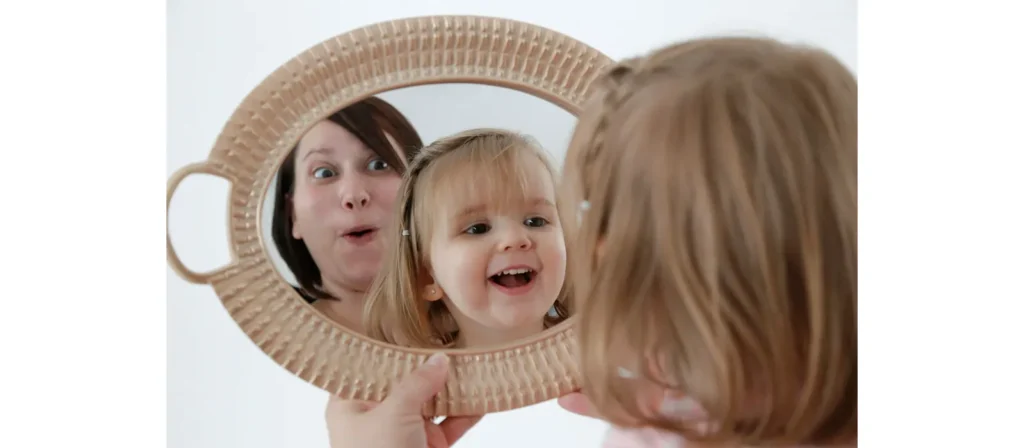
Mirrors help children observe facial expressions as they change, making emotions more concrete and understandable. During mirror play, children begin to notice how feelings appear on their faces and how expressions shift during interaction. This visual awareness supports early emotional literacy in a natural and pressure free way.
In group settings, this awareness contributes to stronger social interaction. Children who can recognize their own expressions are more likely to notice emotional cues in others, supporting empathy and cooperative behavior. This makes mirror play a subtle but effective support for social development within shared learning spaces.
Promotes Independent Learning and Self-Correction
One of the most valuable benefits of mirror play is how it encourages children to evaluate their own actions. Instead of waiting for adult feedback, children use the mirror to observe results and make adjustments independently. This supports problem solving and persistence while protecting concentration.
In early learning environments, tools that reduce constant adult intervention are especially valuable. Mirror play allows teachers to observe rather than interrupt, creating space for deeper engagement and helping children develop confidence in their own judgment and decision making.
Extends Engagement During Play and Learning
Mirror play often lengthens the amount of time children remain engaged with an activity. The visual feedback adds interest without overstimulation, allowing children to stay focused on movement, objects, or interaction. This deeper engagement supports more meaningful exploration and reduces the need for frequent redirection.
Longer engagement also benefits classroom rhythm. When children remain absorbed in play, transitions become smoother and overall noise levels tend to stay lower. This contributes to a more balanced and intentional learning environment.
Integrates Easily Into Daily Classroom Routines
Mirrors function across multiple moments of the day rather than serving a single activity. From arrival and free play to movement breaks and quiet observation, mirror play supports learning without requiring setup or instruction. This makes mirrors a reliable part of the classroom environment rather than an occasional resource.
For educators and planners, this flexibility is especially valuable. Mirror play supports learning consistently while adapting to different teaching styles and room layouts, making it a practical and long lasting addition to preschool learning spaces.
Mirror Play and Sensory Development
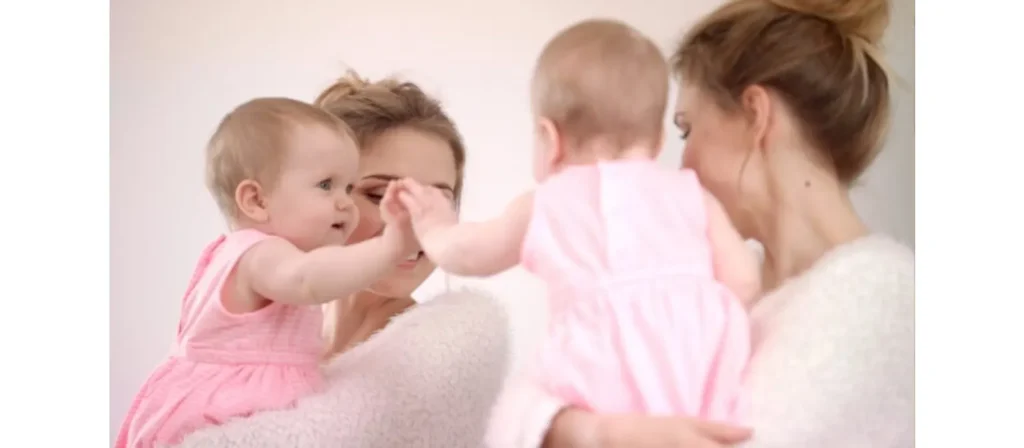
Mirror play is closely connected to sensory development because it combines visual input with movement, balance, and spatial awareness. In preschool learning spaces, mirrors help children process what they feel and see at the same time, making sensory experiences clearer and easier to organize. This integration is especially important in environments where children learn through movement and hands on exploration rather than verbal instruction.
Strengthens Visual and Motor Coordination
When children move in front of a mirror, they receive immediate visual feedback about their actions. This helps them connect what they feel in their bodies with what they see, strengthening coordination between vision and movement. Simple actions such as reaching, turning, or balancing become learning moments as children adjust their movements based on what the mirror reflects.
In early learning spaces, stronger visual motor coordination supports both active play and daily routines. Children who can better control their movements tend to navigate the classroom more confidently, supporting safer play and smoother transitions throughout the day.
Supports Sensory Integration Without Overstimulation
Mirror play offers sensory input without adding noise, lights, or complex materials. The reflection itself is engaging but calm, allowing children to process sensory information at their own pace. This makes mirrors especially suitable for classrooms that aim to maintain a balanced and focused atmosphere.
For children who are sensitive to sensory overload, mirror play can provide grounding rather than stimulation. The predictable and consistent nature of reflection helps children organize sensory input, supporting emotional regulation and sustained attention during play.
Encourages Awareness of Space and Position
Mirrors help children understand where their bodies are in relation to objects, furniture, and other people. Through reflection, children observe distance, direction, and movement in a concrete way. This spatial awareness supports both physical confidence and social interaction within shared spaces.
In well planned classrooms, improved spatial awareness also benefits room flow. Children move with more intention, reducing accidental contact and helping learning areas function as intended.
Adapts to Different Sensory Needs and Ages
One reason mirror play is effective in preschool settings is its adaptability. Younger children may focus on large movements and facial expressions, while older children begin to notice finer details and coordination. The same mirror supports different sensory goals without modification.
This adaptability makes mirror play especially valuable in mixed age classrooms or programs with diverse developmental needs. It remains relevant over time, supporting long term use rather than short term activities.
How Mirror Play Supports Montessori Learning
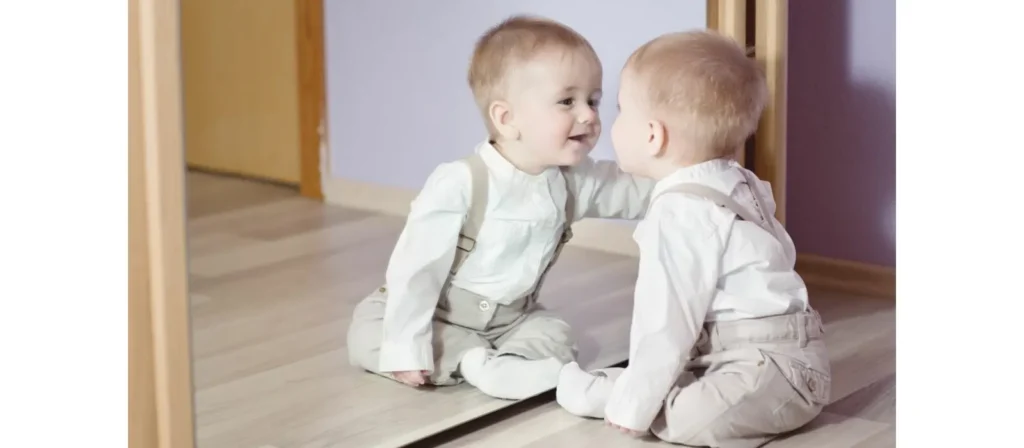
Mirror play fits naturally within Montessori learning environments because it reinforces observation, independence, and self paced discovery. Rather than acting as a teaching aid that requires explanation, the mirror becomes part of the prepared environment, offering feedback without interruption. This quiet support aligns closely with Montessori principles and strengthens learning without changing classroom flow.
Encourages Independent Self-Observation
In Montessori classrooms, children are encouraged to notice and adjust their own actions. Mirror play supports this by allowing children to observe posture, movement, and facial expression without adult direction. When a child notices imbalance, awkward movement, or emotional change through reflection, correction happens naturally rather than through instruction.
This process builds confidence and self trust. Over time, children rely less on external validation and become more comfortable evaluating their own actions, which supports long term independence in learning.
Supports Concentration and Uninterrupted Work
Montessori environments value sustained focus. Mirror play contributes by reducing the need for adult intervention during movement or practical life activities. Instead of being corrected verbally, children receive visual feedback and remain engaged in their work.
This uninterrupted observation helps protect concentration cycles. Children stay absorbed longer, transitions feel calmer, and teachers can observe rather than intervene, supporting a more balanced classroom rhythm.
Reinforces Learning Through Concrete Experience
Montessori learning emphasizes concrete experience over abstract explanation. Mirror play provides immediate, real world feedback that children can see and respond to directly. Movements, expressions, and object manipulation become clearer when reflected, reinforcing understanding through experience rather than instruction.
This makes mirror play especially effective for younger children who learn primarily through physical interaction with their environment. The mirror supports understanding without adding complexity or distraction.
Aligns With the Prepared Environment Concept
In a prepared environment, every element has a purpose. Mirrors are included not as decoration, but as functional tools that support development across activities. When placed intentionally, mirror play enhances learning without dominating the space.
Because mirrors remain useful across different ages and activities, they fit well within Montessori classrooms designed for long term use. This consistency supports stability, familiarity, and confidence for children as they move through the learning environment.
Where Mirror Play Works Best in a Preschool Classroom
The impact of mirror play is closely tied to placement. In well planned preschool classrooms, mirrors are not treated as general wall features but as tools that support specific types of learning. When mirrors are placed in the right areas, they reinforce behavior, extend engagement, and improve how children move through and use the space.
Art and Creative Areas
Art spaces are ideal for mirror play because creative work often involves emotion, posture, and fine motor control. When children can see their facial expressions and hand movements while drawing or painting, they become more aware of how they use their bodies during creative tasks. This visual feedback supports intentional movement and helps children slow down and concentrate on the process rather than rushing through the activity.
Mirrors in art areas also encourage reflection in a literal sense. Children frequently pause to look at themselves and their work, thereby extending engagement and supporting self-expression. Over time, this contributes to a stronger focus, improved fine-motor coordination, and a calmer, more creative environment where children feel comfortable experimenting.
Dramatic Play and Role Play Areas
Dramatic play spaces benefit from mirrors because reflection supports identity exploration and social awareness. Children naturally use mirrors to observe expressions, gestures, and body language as they take on different roles. This makes pretend play more expressive and helps children understand how emotions and actions are communicated.
In group play, mirrors also support social regulation. Seeing themselves and others helps children adjust volume, movement, and interaction without adult reminders. This leads to more cooperative play and reduces conflict, making mirrors especially valuable in shared dramatic play zones.
Movement and Gross Motor Zones
In movement areas, mirrors provide clear visual feedback that supports balance, coordination, and spatial awareness. Children can see how their bodies move when stretching, balancing, or changing direction, which helps them adjust posture and movement in real time.
This awareness improves both safety and confidence. Children move with more intention, reducing uncontrolled motion and collisions. Over time, mirror supported movement contributes to better body control, which carries over into other classroom activities and daily routines.
Reading Corners and Quiet Spaces
While mirrors are often associated with active play, they can also support calm learning areas when used thoughtfully. In reading corners, low positioned mirrors invite quiet self observation without demanding attention. Children may glance at their reflection while settling into a book, helping them recognize emotional states and relax into the space.
Rather than distracting from reading, mirrors in quiet areas can support emotional regulation. They create a sense of presence and familiarity, making these spaces feel more comfortable and secure, especially for children who need time to settle before engaging.
Entry and Transition Areas
Transition spaces are often overlooked, yet they are some of the most emotionally active areas in a preschool classroom. Mirrors near entrances help children recognize themselves as they arrive, supporting a sense of belonging and reducing separation anxiety.
During transitions, mirrors encourage children to pause and reorient. This brief moment of self-observation helps children prepare for the next activity, resulting in smoother transitions and a more organized classroom flow.
Design Considerations for Classroom Mirror Play
While mirror play offers clear developmental benefits, its effectiveness depends on thoughtful design and installation. In preschool environments, mirrors are used daily, often by multiple age groups, which means design decisions must balance safety, durability, and long-term usability. The following considerations help ensure mirrors support learning without creating risk or maintenance issues.
Recommended Mounting Height by Age
Mounting height is one of the most common mistakes in classroom mirror installation. Mirrors placed too high quickly lose their learning value, while mirrors placed too low may limit visibility or interfere with movement.
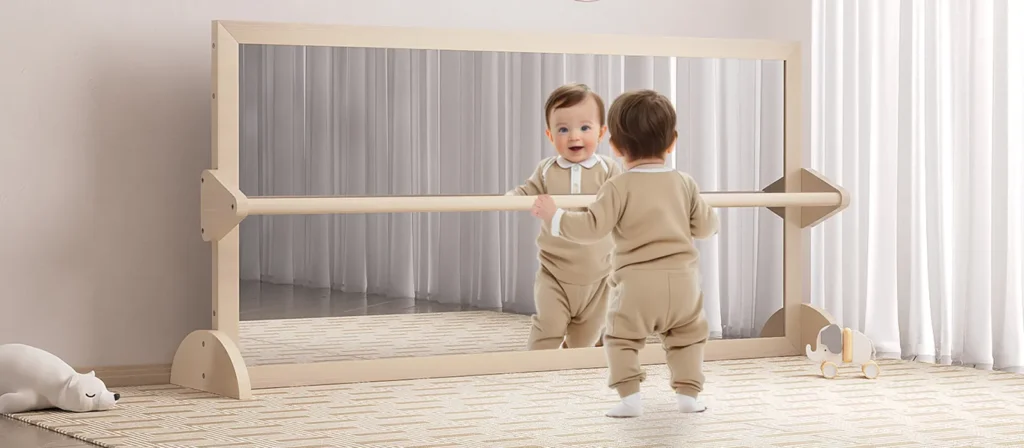
For younger children, mirrors should align with seated or crawling eye level, supporting floor based exploration. For older preschoolers, wall mounted mirrors at standing eye level allow full body observation during movement and play. In mixed age classrooms, wider or vertically extended mirrors offer greater flexibility and longer service life.
Material Choice: Acrylic vs Glass
Material selection directly affects safety and maintenance. Acrylic mirrors are widely used in preschool settings because they are lightweight, shatter resistant, and safer for active environments. They reduce the risk associated with impact and are easier to mount securely on different wall types.
Glass mirrors may offer higher clarity but are generally less suitable for early learning spaces due to breakage risk and weight. For most classrooms, acrylic provides the best balance between visual quality, safety, and long term durability.
| Aspect | Acrylic Mirrors | Glass Mirrors |
|---|---|---|
| Safety in active areas | Shatter resistant, lower injury risk | Can break on impact |
| Poids | Lightweight, easy to handle | Heavy, requires stronger fixing |
| Installation | Suitable for various wall types | Limited by wall strength |
| Durability in classrooms | Designed for frequent use | More fragile in daily use |
| Visual clarity | Very good for learning use | Higher clarity |
| Entretien | Easy to maintain with proper cleaning | Requires careful handling |
| Preschool suitability | Highly recommended | Generally not recommended |
Safety Edges and Secure Fixing
Classroom mirrors must be designed with safety in mind. Rounded corners and smooth edges reduce the risk of injury during close interaction. Secure fixing is equally important, especially in high traffic areas where children may touch or lean against the mirror.
Mounting systems should be appropriate for the wall structure and capable of long term use without loosening. Poor installation can undermine even the best material choice, making professional mounting guidance an important part of classroom planning.
Placement and Classroom Flow
Mirrors should support learning without disrupting movement or sightlines. Placement near doorways, narrow walkways, or busy transitions can create visual distraction or congestion. Instead, mirrors work best when integrated into defined activity zones where reflection adds meaning to play or observation.
Considering classroom flow during the design phase helps ensure mirrors enhance rather than complicate daily routines. Well placed mirrors contribute to calmer movement and clearer spatial boundaries.
Maintenance and Daily Cleaning
Daily use means mirrors must be easy to maintain. Acrylic mirrors require gentle cleaning to avoid scratches, but they generally handle frequent wiping well when proper materials are used. Clear cleaning guidelines help maintain appearance and extend product life.
From a planning perspective, choosing mirrors that are easy to clean and resistant to wear reduces long term maintenance effort for staff and keeps learning spaces looking professional and well cared for.
Choosing the Right Mirrors for Preschool Use
Choosing mirrors for preschool use is less about style and more about matching classroom needs. The right mirror supports daily learning and remains reliable over years of use, while the wrong choice often leads to safety concerns, poor visibility, or wasted wall space. The following factors help buyers and educators choose mirrors that fit real classroom conditions.
Match Mirror Type to Classroom Use
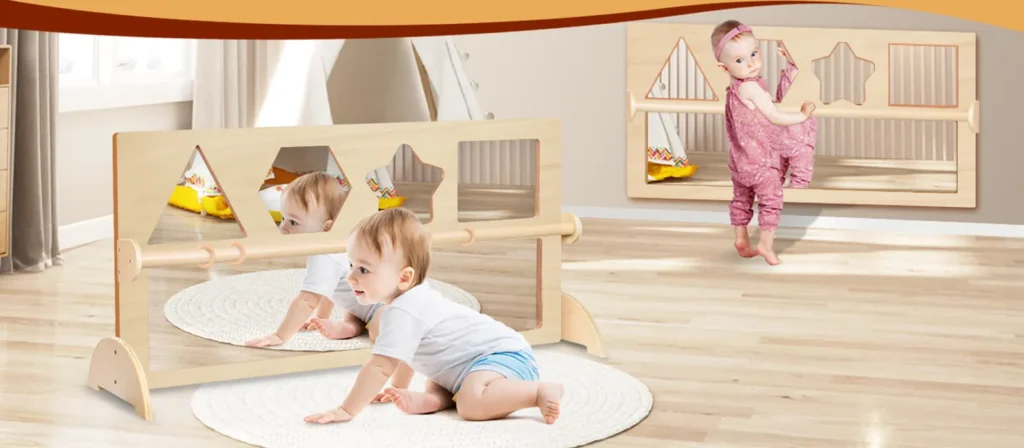
Wall mounted mirrors are the most common option for preschool learning spaces because they are stable, space efficient, and easy to integrate into activity zones. They work well in art areas, dramatic play corners, and movement zones where children benefit from consistent access and clear visual feedback.
Freestanding mirrors can be useful for flexible layouts, temporary setups, or rooms that change frequently. However, they require careful attention to base stability and placement, especially in high traffic areas. For most long term classroom planning, wall mounted mirrors are preferred because they reduce tipping risk and keep circulation areas open.
Choose Sizes That Support Real Interaction
Mirror size affects how children use it. Small mirrors may only support face level observation, while larger panels allow children to observe full body movement and positioning. In preschool settings, wider visibility often improves learning value because children can see movement outcomes more clearly.
For mixed age classrooms, selecting a size that supports both seated and standing interaction extends usability. Larger mirrors also allow more than one child to engage at once, which reduces crowding and supports social observation during shared play.
Prioritize Safety Features for Daily Use
Preschool mirrors must handle frequent touch and close contact. Rounded corners, smooth edges, and secure mounting systems are not optional details. They determine whether mirrors remain safe across years of use and whether staff can feel confident placing them in active learning zones.
If mirrors are part of a broader classroom package, safety consistency matters. Mirrors should match the safety standard of other classroom furniture, particularly in programs that prioritize risk control and long term durability.
Consider Customization for Project-Based Classrooms
In real projects, classroom walls, room dimensions, and learning zones rarely follow a standard template. This is why customization is common in preschool procurement. Mirrors often need specific widths, heights, or edge treatments to fit the available wall area and match classroom layout plans.
Customization also helps align mirrors with the design language of the classroom. When mirrors match the overall furniture system and room plan, the space feels cohesive and intentional, which matters for both daily operation and parent facing presentation.
Think About Long-Term Maintenance and Replacement
A mirror that looks good on day one still needs to look acceptable after months of daily cleaning. Acrylic surfaces require proper cleaning habits, but the right material choice and surface quality can greatly reduce scratches and clouding.
For procurement teams, it is also worth considering continuity. Mirrors that are easy to replace, reorder, or expand as programs grow reduce long term sourcing risk, especially for multi site childcare groups or schools planning phased upgrades.
Common Mistakes When Adding Mirror Play to Classrooms
One common mistake is treating mirrors as decorative elements rather than functional learning tools. When mirrors are installed too high, too small, or placed without considering how children actually use the space, they quickly lose their educational value. In these cases, mirrors may look visually pleasing but fail to support self observation, movement awareness, or sustained engagement during play.
Another issue is overlooking safety and long term use during planning. Choosing unsuitable materials, ignoring edge treatment, or relying on weak mounting methods can create risks in active classroom environments. Mirrors are touched frequently and often placed in high traffic areas, which means safety design and secure fixing should always be prioritized over appearance or short term cost savings.
A third mistake is failing to integrate mirror play into the overall classroom layout. When mirrors are placed near busy walkways or unrelated activity zones, they can disrupt movement and attention rather than support learning. Effective mirror play works best when mirrors are aligned with specific learning areas and room flow, becoming a natural part of daily routines instead of an isolated feature.
Conclusion
Mirror play is often overlooked in preschool design, yet its impact on learning spaces is long-lasting. When mirrors are placed with intention, they quietly support self-awareness, movement control, emotional recognition, and sustained engagement. Unlike many classroom elements that serve a single purpose, mirrors continue to add value across different activities, age groups, and daily routines.
For educators and planners, the real value of mirror play lies in how naturally it integrates into the environment. It does not demand instruction, supervision, or complex materials. Instead, it strengthens learning through observation and self-correction, supporting calmer classrooms and more independent learners. When combined with thoughtful placement, safe materials, and proper installation, mirror play becomes a reliable part of a well-designed preschool learning space rather than a decorative afterthought.





 FR
FR  EN
EN  AR
AR  IT
IT  DE
DE  ES
ES  TH
TH  JA
JA  TR
TR