A childcare fit-out quotation is only useful when each supplier is pricing the same rooms, quantities and product requirements. Before requesting quotes, turn the latest room plan into a room-by-room childcare centre furniture schedule: what each space must support, which furniture category fits that use, how quantities are counted, and which product details still need confirmation.
This guide gives you a practical schedule format and examples using furniture categories shown in TOP Montessoris’ online range. It focuses on classroom furniture planning—not construction work, service capacity or regulatory approval. Keep unknown dimensions, finishes and documents marked to confirm rather than filling gaps with assumptions.
| Step | Work from | Record before moving on |
|---|---|---|
| 1. Freeze the drawing | The latest dimensioned room plan | File name, revision and date |
| 2. Map each use | Activities and routines by room | Users at one time, fixed features and movement paths |
| 3. Select categories | The job each zone needs to do | Furniture type and the reason it is needed |
| 4. Confirm models | Supplier information for the exact item | Dimensions, finish, care, assembly and documents |
| 5. Compare quotes | One shared plan and schedule | Like-for-like inclusions, exclusions and delivery terms |
Start with The Latest Dimensioned Plan
Use one drawing revision for every furniture discussion. Put the drawing name, revision and date at the top of the schedule; if the room layout changes, update the schedule and resend both files. This prevents one supplier pricing an old plan while another prices a revised layout.
Before listing products, mark the details that affect placement:
- room and zone names, doors, windows and fixed joinery;
- the activities planned in each area and the number of children expected to use it at one time;
- furniture or storage that will remain, move or be replaced;
- routes staff and children use during normal activities and transitions; and
- any dimensions, surfaces or service locations that the designer or builder still needs to verify.
Use the dimensioned plan and project team’s confirmed clearances—not a product photo or catalogue sketch—to test whether an item fits. A supplier can provide product dimensions, but the operator and local project professionals must confirm the room design and applicable requirements.
Match Furniture to The Activity
Choose a furniture category because it supports a real classroom task, not simply because it appears in a catalogue. TOP Montessoris’ preschool tables and chairs range lists options such as preschool rectangular tables and stacking chairs. Its online range also lists a sand and water activity table. These are examples of available categories, not a pre-set Melbourne classroom package.
| Planned use | Example category to assess | Quantity basis and checks |
|---|---|---|
| Small-group drawing, making or shared table work | Preschool table with a compatible chair type | Count the seats needed for the largest group scheduled in that zone. Confirm the exact table and chair models, finished dimensions and fit as a pair. |
| Sensory or water-play activity | Sand and water activity table | Count stations from the planned routine and simultaneous use. Confirm the exact model’s overall dimensions, materials, finish, care and any handling or assembly instructions. |
| Existing storage or independent work area | Keep, relocate or replace the items shown on the plan | Inventory what the room already has. Add only the missing items, and record their exact type and dimensions before asking for a price. |
The product photos below show examples from the site’s online range. They identify product categories only; they do not establish a model’s dimensions, materials, safety certification or suitability for a particular room.

Preschool rectangular table category; confirm the selected model and its finished dimensions with the supplier.

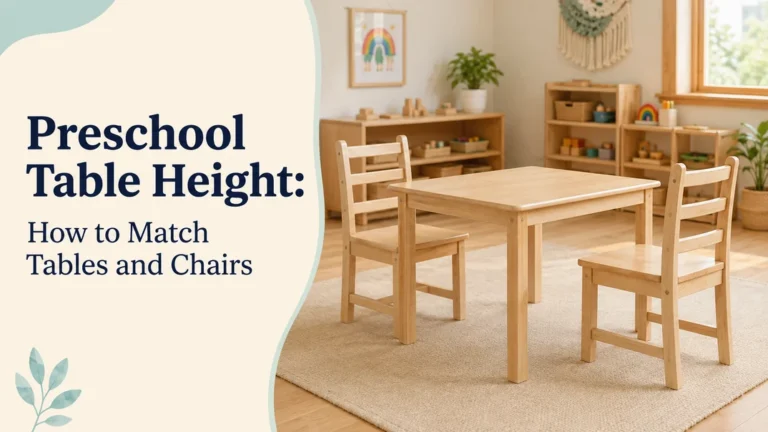
Preschool stacking chair category; check the actual table-and-chair pairing rather than choosing either height in isolation. See the preschool table-and-chair height guide for fit checks.

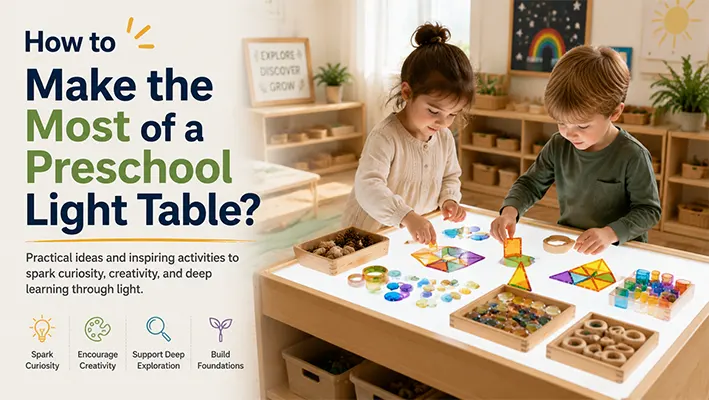
Sensory-table example; request model-specific dimensions, materials and care details before adding it to a final order.
Build A Room-by-Room Furniture Schedule
The schedule should connect the room plan to the exact items being priced. Keep one row per model and separate confirmed information from open questions. The sample below shows how to write useful rows without guessing product specifications or imposing the same quantity on every centre.
| Room / plan reference | Activity and users at one time | Item and quantity basis | Supplier details to confirm |
|---|---|---|---|
| Creative zone / drawing callout from current plan | Table work; enter the largest group using this zone at one time | Preschool table and compatible chairs; count the planned seats shown on the layout | Exact model, assembled dimensions, materials, finish, care and any model-specific documents |
| Sensory zone / location on current plan | Sand or water activity; enter the number of simultaneous stations in the routine | Sand and water activity table; count from the planned activity and room arrangement | Exact model and outer dimensions, materials, finish, cleaning, handling and assembly information |
| Storage / room-specific callout | Materials used and stored in this room; note any existing units to keep | List only the new or replacement units after checking the room inventory | Model, dimensions, storage capacity if specified, anchoring or assembly instructions and finish |
For each line, include the product name or model code where known, requested quantity, unit of measure, colour or finish, and the plan revision used. If a specification is not available yet, write supplier to confirm and leave the quote conditional; do not substitute a guessed dimension or generic catalogue description.
Set Quantities from Shared Use, Not Enrolment Totals
Total enrolment alone does not tell you how many tables or activity stations a room needs. Start with the timetable and map which groups use each zone at the same time. Then check whether furniture is shared across activities or needs to stay in place for the full routine.
For seats, use the number of places required in the largest planned group assigned to that table area. For activity tables, count the stations the routine needs at once and check that the placement works on the plan. For storage, list the materials the room must hold and identify existing units that will remain. Keep any spare or replacement quantity as a separate operational choice, not hidden inside the room count.
Ask the designer or project lead to check the selected footprints against the current drawing and applicable circulation requirements. If the furniture plan changes, update the plan revision and schedule together before suppliers prepare final quotations.
Ask Suppliers to Confirm The Exact Product Details
For every model in the schedule, request information that lets the project team compare the item and check whether it suits the intended use:
- exact model or SKU, colour and finish;
- overall assembled dimensions, and usable dimensions where relevant;
- material, finish and written cleaning or care instructions;
- assembly requirements, package size and unit weight if these affect delivery or handling;
- stated user, age or load limits, where the manufacturer provides them;
- model-specific safety or compliance documents required for the project or target market; and
- availability, quote validity, warranty, replacement parts and any proposed substitution.
If a document is required, ask which exact model and market it covers. A general statement such as “meets international standards” is not a substitute for identifying the applicable standard and supporting document. Do not treat a supplier quote or furniture layout as confirmation of planning permission, building approval, licensed capacity or service approval. For current Victorian service-opening requirements, check VECRA’s guide to opening a childcare service and confirm address-specific matters with the relevant authorities and qualified professionals.
Compare Quotes on The Same Scope
Send each supplier the same plan revision and schedule. Ask them to show the quoted model, quantity, unit price, included finish, delivery destination and timing, assembly scope, packaging removal, exclusions and any assumptions. Require proposed substitutions to be listed separately so a lower price does not quietly change the item being compared.
For an order delivered to Melbourne, confirm the delivery address and access conditions with the supplier: unloading arrangements, access hours, any appointment requirement and whether delivery is to the building, room or another agreed point. Keep construction, installation and site-work responsibilities separate from the furniture supply quotation unless they are explicitly included.
Do not release an order with unresolved model, dimension or quantity fields if those details could change the room layout or quote total. Send the final approved schedule—with its plan revision—to every supplier and keep a record of accepted substitutions.
Frequently Asked Questions
Is A Floor Plan Enough to Request A Furniture Quote?
A floor plan is the starting point, but suppliers also need the intended use, quantities and product-level requirements. Send the drawing revision with a room-by-room schedule and ask suppliers to identify any missing dimensions or assumptions.
How Many Tables And Chairs Should A Childcare Centre Order?
There is no single quantity that fits every room. Count the places and activity stations needed at the same time for the planned routine, then check the proposed layout and selected products against the actual room plan.
Can A Furniture Supplier Confirm That A Room Meets Victorian Approval Requirements?
No. A furniture supplier can provide product information and quote the specified items. The operator, regulator, council and qualified project professionals are responsible for their respective approval and design decisions.
When Should We Request Final Furniture Quotes?
Request comparable quotes once suppliers have the same current plan and enough detail to identify each item, quantity, finish, delivery destination and unresolved assumption. If a required product specification or layout decision is still open, list it as a question rather than treating it as settled.
Send The Same Furniture Brief to Every Supplier
The useful output is a versioned schedule that connects each room’s activity to specific furniture categories, quantity logic and model-level questions. It gives the designer, operator and suppliers a shared basis for resolving gaps and comparing quotations.
If you are considering items from TOP Montessoris’ range, contact TOP Montessoris with the current room-plan revision, intended activities, users at one time, requested product categories and Melbourne delivery postcode. Ask for model-specific details before treating any item as confirmed. Local site approvals and construction decisions should remain with the responsible project professionals and authorities.