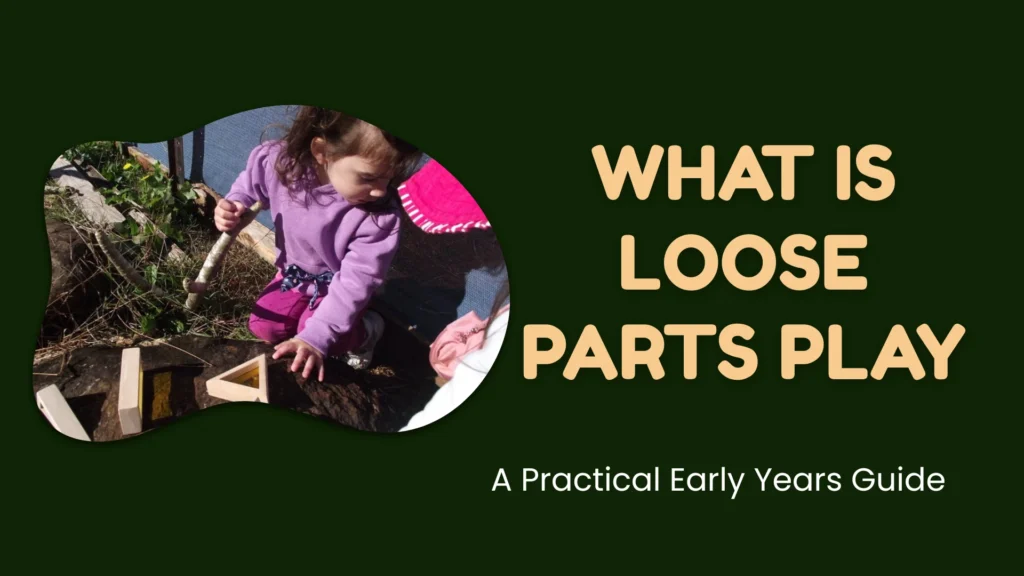
Loose parts play is a foundational idea in early childhood education that encourages children to interact with materials in open ended, creative ways. Instead of relying on toys with fixed purposes, children are invited to explore flexible objects they can move, combine, and redefine according to their imagination.
At its core, loose parts play is a way of thinking. It sees materials not as tools with instructions but as invitations for invention. Through this kind of play, children construct meaning, test ideas, and express themselves by engaging directly with their environment. The value lies not in the materials themselves, but in the thinking they provoke.
To understand why this approach matters, we need to look more closely at the role it plays in child development, the kinds of materials that support it, how environments can be designed to encourage it, and the part adults play in making it effective. The following sections explore each of these elements in depth.
What Is Loose Parts Play?
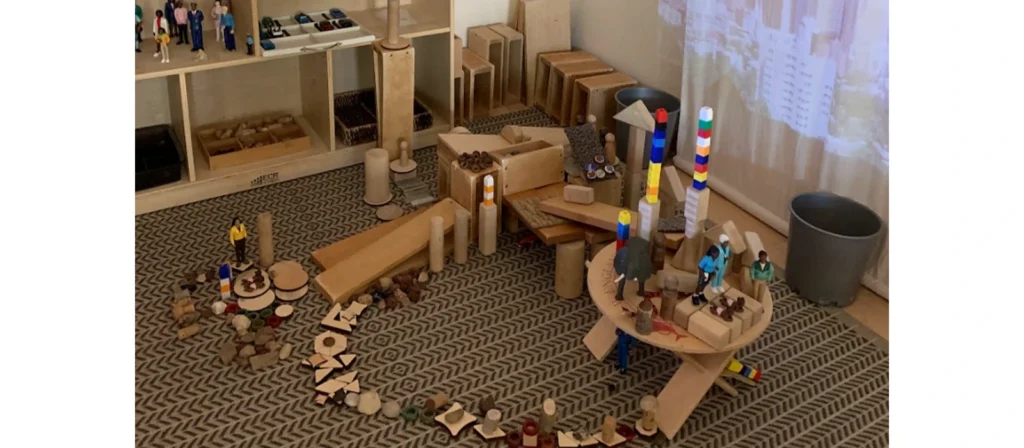
Loose parts play is a child-led, open-ended play approach that uses a variety of movable materials called “loose parts” to encourage creativity, experimentation, and problem solving. Unlike fixed toys with a single function, loose parts have no predefined use. Children can manipulate them in countless ways to construct, deconstruct, invent, and explore freely.
The concept was originally introduced by architect Simon Nicholson in the 1970s, who believed that the creative potential of any environment was directly related to the variety and flexibility of its components. In the early years context, loose parts play is more than just using recyclable materials or outdoor items. It is about fostering a mindset where children are seen as capable learners and innovators.
主な特徴
- Open ended: There is no right or wrong way to use the materials.
- Child led: Children decide how and when to use items based on their own ideas.
- Adaptable: Materials can be reused and combined in endless ways.
- Accessible: Loose parts can be found in nature, homes, and classrooms.
Why Loose Parts Play Matters in Early Years?
Loose parts play is not just a trend in early childhood education. It aligns deeply with how young children learn best through exploration, experimentation, and meaningful interaction with their environment. When we ask why loose parts play matters in the early years, the answer lies in the developmental benefits it offers across all domains of learning.
Supports Cognitive Development
Loose parts encourage children to think critically and creatively. As they stack, sort, arrange, and experiment with materials, they engage in problem solving, hypothesis testing, and decision making. This form of play promotes spatial awareness, mathematical thinking, and abstract reasoning, often long before these skills are introduced formally in school.
Encourages Physical Coordination
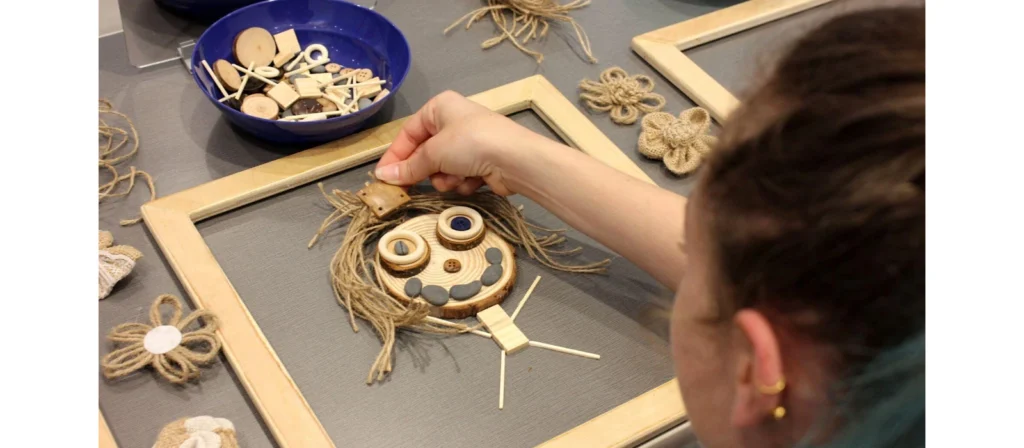
Manipulating loose parts, especially in outdoor environments, develops both fine and gross motor skills. From picking up small buttons to lifting heavy wooden planks, children refine hand eye coordination, balance, strength, and agility through active movement.
Sparks Imagination and Creativity
Loose parts are inherently open to interpretation. A cardboard tube might be a telescope, a magic wand, or a tunnel. This creative flexibility allows children to construct and express complex ideas using whatever is available, making play both deeply personal and endlessly inventive.
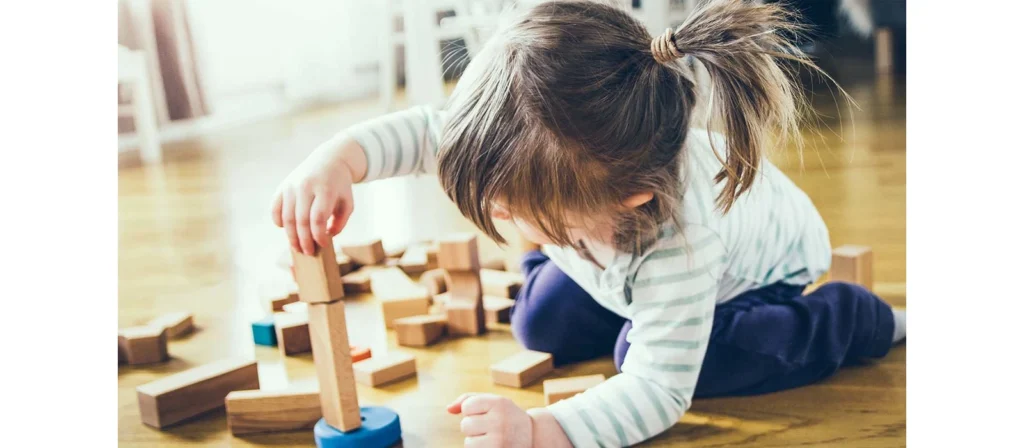
Promotes Autonomy and Confidence
In loose parts play, children are trusted to make decisions. This autonomy empowers them to take risks, try new ideas, and learn from failure. Over time, this builds confidence and a strong sense of self as they realize their ideas have value and their voices matter.
By supporting the whole child cognitively, socially, emotionally, physically, and creatively, loose parts play offers a robust foundation for lifelong learning. It meets children where they are and invites them to grow through discovery.
Examples of Loose Parts for Play
Loose parts can be found almost anywhere. The beauty of this play approach lies in its accessibility and versatility. From natural items to everyday household objects, the materials used in loose parts play are limited only by imagination and safety considerations. Here are the most commonly used categories and examples of loose parts for early years environments.
Natural Materials
Nature offers an abundant supply of open-ended resources that are ideal for loose parts play. These items bring texture, variety, and seasonal interest to children’s exploration.
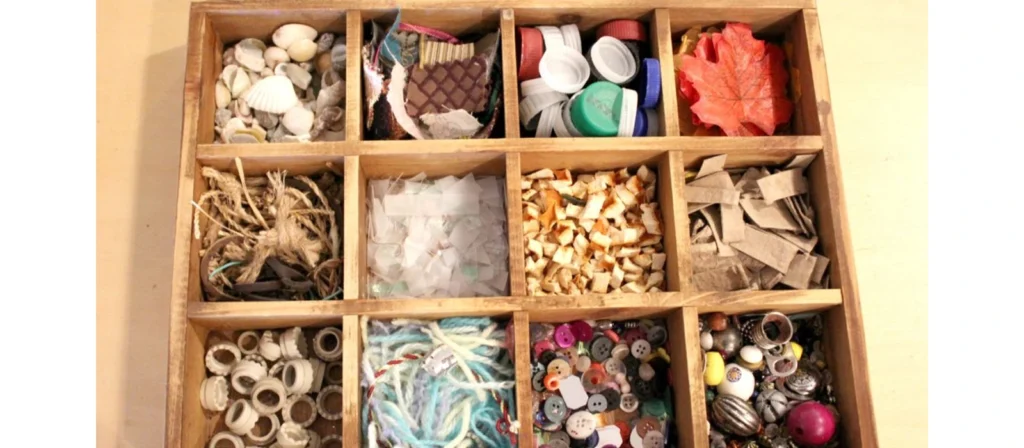
Examples include:
- Sticks, twigs, and branches
- Stones and pebbles
- Pinecones, leaves, and seed pods
- Shells and driftwood
- Sand, mud, and water
Natural materials encourage sensory play and connect children to the outdoors while promoting environmental awareness and appreciation.
Recycled and Repurposed Items
Loose parts do not need to be store bought. Recycled materials can serve as rich resources that spark creativity and conversation.
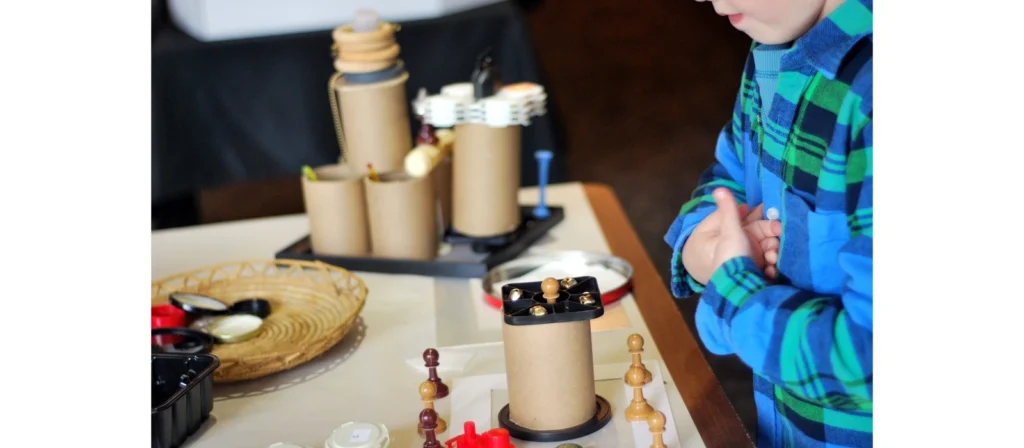
Examples include:
- Cardboard tubes and boxes
- Bottle caps and lids
- Fabric scraps and yarn
- Old keys, buttons, and zippers
- Paper towel rolls and egg cartons
Using recycled materials reinforces sustainability values and teaches children to see potential in ordinary objects.
Household and Everyday Items
Everyday objects from around the home or classroom often become favorite loose parts because of their familiarity and unexpected possibilities.
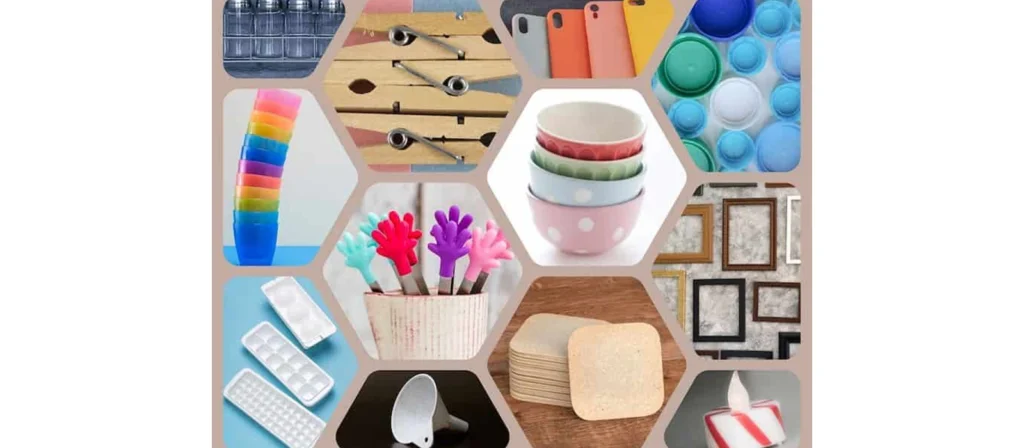
Examples include:
- Kitchen utensils like spoons and measuring cups
- Plastic containers and baskets
- 木のブロック and coasters
- Clothespins, beads, and curtain rings
- Ribbons, string, and rubber bands
These objects encourage role play, sorting, building, and inventive storytelling.
Larger Construction Items
Some environments, especially outdoor play areas, benefit from larger loose parts that allow for collaborative building and gross motor engagement.
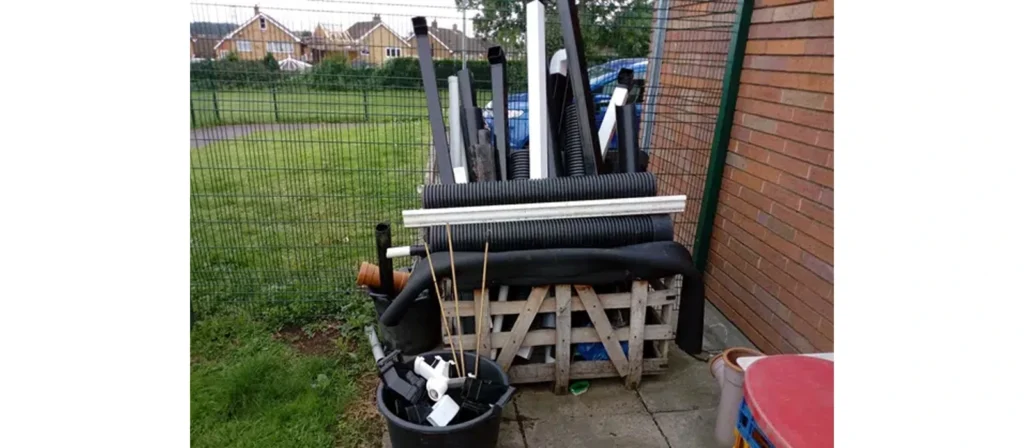
Examples include:
- Wooden planks and crates
- Tires and wheels
- Ropes and tarpaulins
- Buckets, pipes, and tubes
- Milk crates and traffic cones
These elements support engineering, teamwork, and physical exploration on a broader scale.
Sensory and Creative Additions
Adding a few sensory or artistic elements can further enrich loose parts play, allowing children to express themselves through color, sound, and movement.
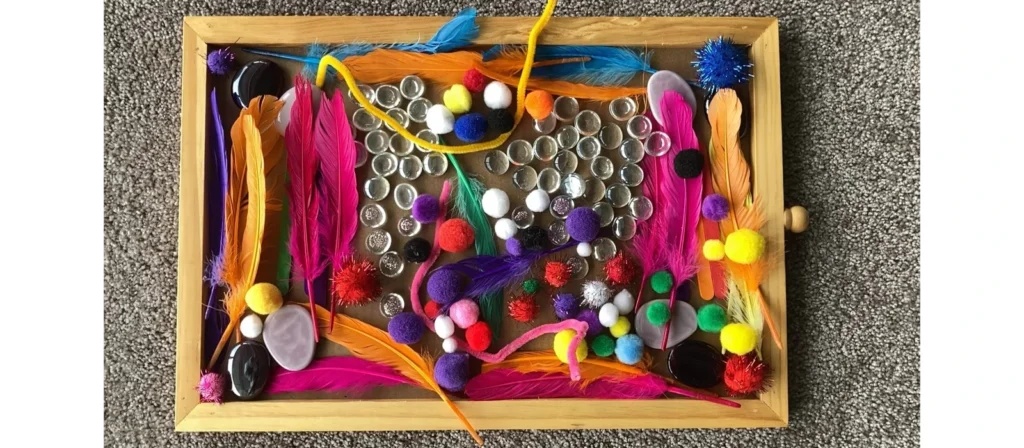
Examples include:
- Feathers, pom poms, and ribbons
- Musical instruments or materials that make sound
- Transparent or reflective items like CDs or mirrors
- Paintable surfaces or chalkboards
- Water beads or kinetic sand
These sensory-rich materials invite children to explore new textures and experiment with artistic expression.
Loose parts can be stored in baskets, trays, or containers that keep them visible and accessible. A well curated and regularly refreshed collection allows children to continually discover new possibilities and redefine how they engage with materials.
Loose Parts Play Activity Ideas
Loose parts play becomes most powerful when children have access to flexible, open-ended activities that invite them to create, problem-solve, and imagine freely. Below are example activities designed to inspire independent thinking, cooperative learning, and hands-on exploration in early years settings.
Build a Home for a Toy
Invite children to build a shelter for a small toy animal or figure using blocks, fabric, or natural materials. This encourages empathy, spatial thinking, and design creativity.
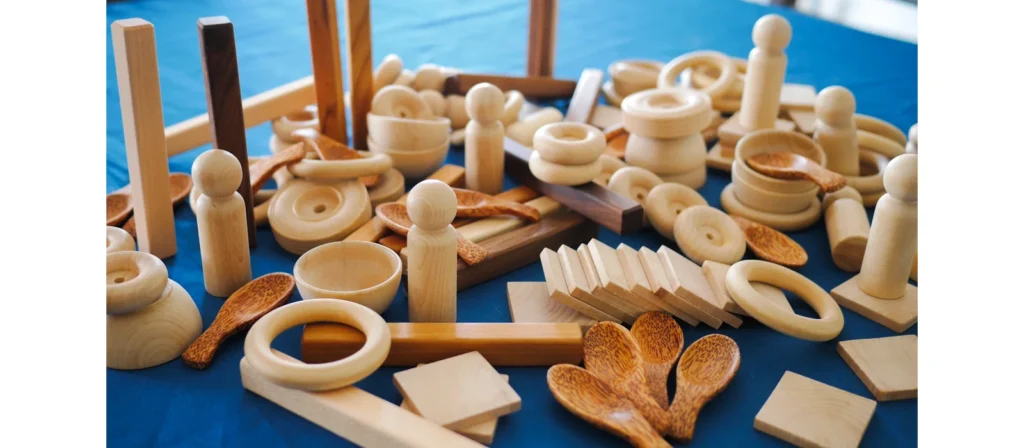
Create a Rolling Object
Provide wheels, tubes, bottle caps, and recycled parts. Challenge children to design something that moves. They will explore motion, balance, and problem solving.
Sort by Secret Rule
Offer a mixed collection of materials and let one child sort them using a hidden logic such as color, texture, or size. Others guess the rule. This builds classification skills and peer communication.
Design an Obstacle Course
Using planks, cones, ropes, or cushions, children create a physical course for jumping, crawling, or balancing. This supports gross motor development and teamwork.
Invent a New Tool
Ask children to make a tool using loose parts that could scoop, carry, or connect things. This promotes functional thinking and real-world problem solving.
Tell a Story with Objects
Provide shells, stones, sticks, or buttons. Children select a few and invent a story around them. This boosts narrative skills and imaginative thinking.
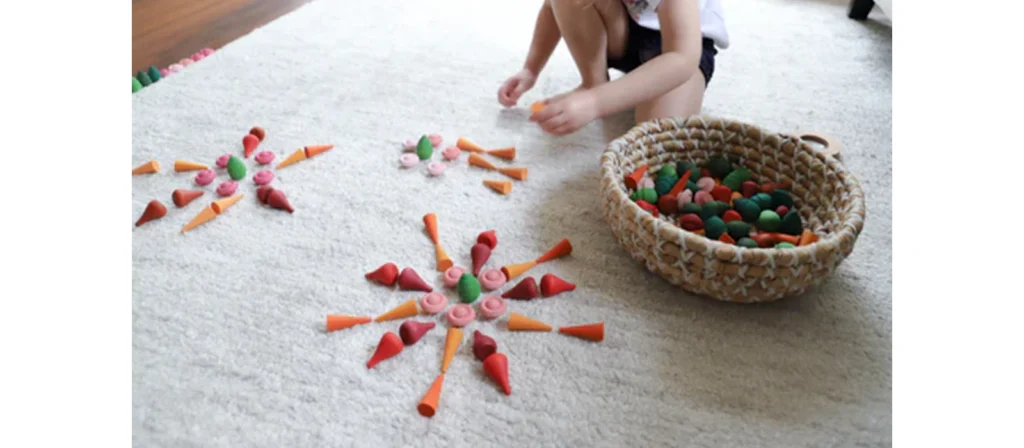
Make a Pattern or Mandala
Encourage children to arrange small loose parts into patterns or circular designs. This activity strengthens early math concepts and symmetry awareness.
Construct a Bridge
Challenge children to build a bridge between two surfaces using available materials. They test for strength and stability, practicing trial and error.
Build a Machine or Invention
Give children gears, boxes, tubes, and connectors. Let them build imaginary machines and explain what they do. This supports engineering play and creative thinking.
Loose Parts Kitchen or Cafe
Set up a pretend cooking area using natural materials, bowls, and spoons. Children engage in role play, planning, and collaborative routines.
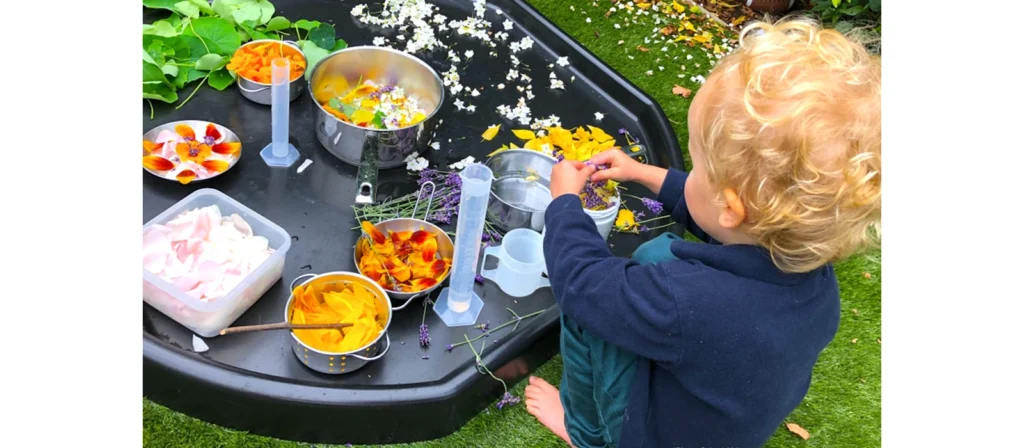
Create a Shadow Play Setup
Offer transparent and opaque items along with a light source. Children explore shadow shapes and use them to tell visual stories, combining science and art.
Map or City Building
Children use blocks, stones, fabric, and containers to design a city or landscape with roads, rivers, and landmarks. This develops planning and spatial awareness.
Recreate a Real-World Structure
Show children a picture of a famous building or bridge and invite them to recreate it using available materials. They interpret form and structure creatively.
Designing a Loose Parts Play Environment Indoors and Outdoors
A well-designed loose parts play environment is more than a collection of interesting materials. It is an intentionally arranged space that empowers children to explore, create, and engage independently. Whether indoors or outdoors, the environment should act as a silent teacher, offering freedom while supporting safe, meaningful learning experiences.
Indoor Loose Parts Play Environments
Indoor environments offer a controlled, sheltered space where smaller and more delicate materials can be explored in depth. To design a rich loose parts play space indoors, consider the following elements:
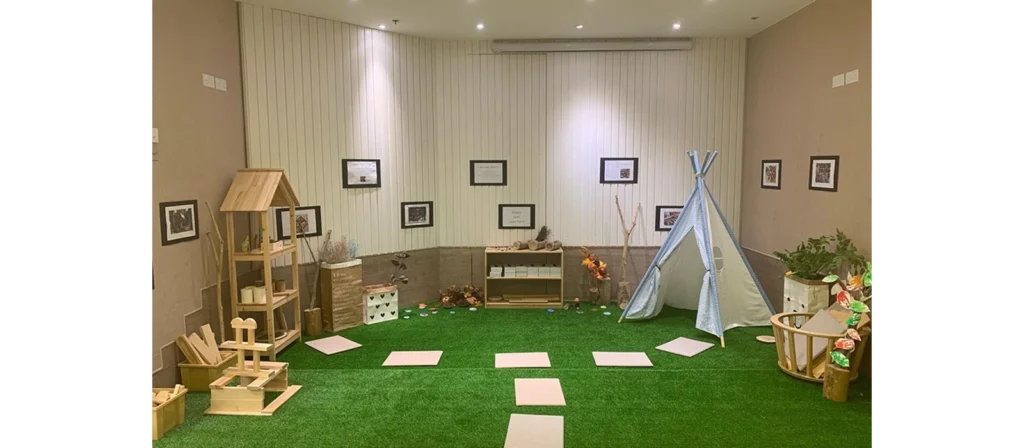
1. Defined Zones for Play
Create dedicated areas within the room that invite different types of exploration. Examples include:
- Construction area: with blocks, wooden planks, connectors, and natural materials.
- Art and design area: with buttons, ribbons, fabrics, paper scraps, and glue.
- Small world or storytelling area: with figurines, pebbles, sticks, and miniatures.
Each zone should be clearly marked, yet flexible enough to allow children to mix materials across areas.
2. Open and Visible Storage
Children are more likely to engage when materials are easy to see and access. Use open baskets, clear containers, shallow trays, and low shelving. Group similar items together by color, texture, or function to encourage sorting, organizing, and categorizing.
3. Flexible Furniture and Layout
Avoid permanent fixtures. Use lightweight tables, rugs, and shelves that can be moved to change the space as children’s needs evolve. Include open floor space for building large structures or creating extended setups.
4. Aesthetics and Sensory Appeal
Keep the visual environment calm and inviting. Use neutral wall colors, natural lighting, and soft textures to make materials stand out. Avoid visual clutter or over-decoration that may distract from the play itself.
Outdoor Loose Parts Play Environments
Outdoor spaces offer expanded opportunities for physical movement, risk taking, and nature-based play. When designed with intention, outdoor loose parts areas support gross motor development, collaboration, and environmental awareness.
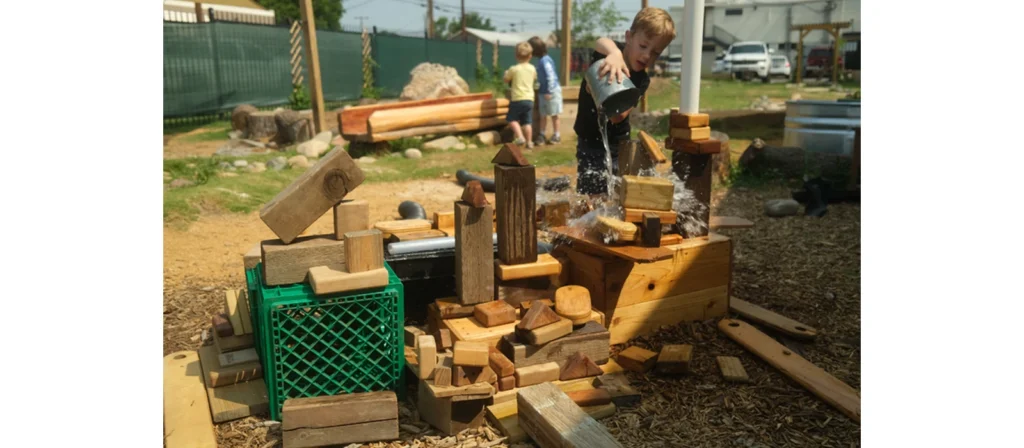
1. Incorporate Large and Durable Loose Parts
Select weather-resistant materials that invite full-body play. Ideal items include:
- Wooden pallets, crates, and logs
- Tires, tubes, and pipes
- Tarps, ropes, and planks
- Buckets, wheelbarrows, and baskets
These materials encourage building, transporting, climbing, and cooperative tasks.
2. Design Multi-Use Zones
Rather than fixed structures, offer open-ended spaces such as:
- A construction corner with sand, water, and building materials
- A creative area with mud kitchens or art easels
- A quiet nature spot with stumps, plants, and shade
Allow loose parts to move freely between zones to support creativity and reimagining of space.
3. Blend with Natural Features
Use the landscape as part of the play experience. Incorporate hills, tree stumps, rocks, and gardens to promote physical exploration and environmental interaction. These natural features add variety and support seasonal learning.
4. Organized but Flexible Storage
Even outdoors, storage matters. Use open bins, sheds, or rolling carts to organize materials while keeping them easy to access and tidy. Label containers with symbols or pictures to support self-selection and clean-up routines.
Support Loose Parts Play with the Right Setup
Create child-led spaces with Montessori-aligned furniture and materials made for real play and discovery. Designed for early years classrooms that grow with learners.
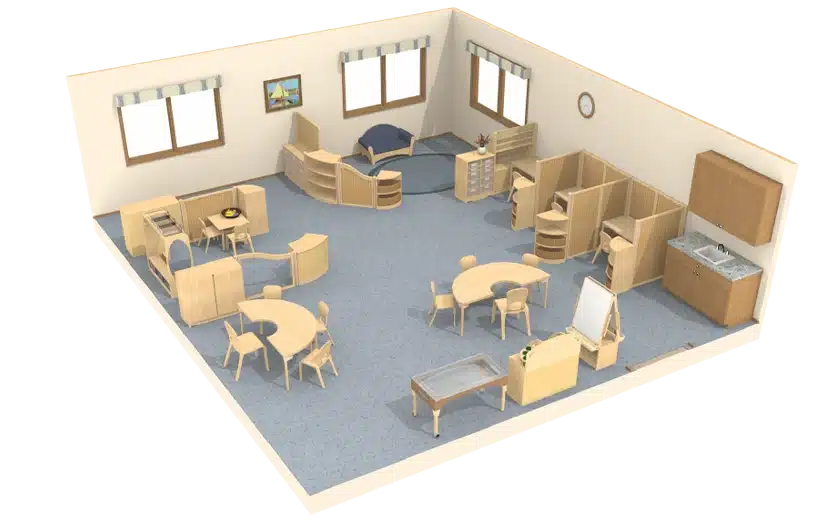 Explore Our Design Solutions
Difference Between Loose Parts Play and Free Play
Loose parts play and free play are often used interchangeably, but they are not identical. While both are child-led and unstructured by design, they differ in purpose, materials, adult involvement, and learning depth.
Free play is any activity initiated and directed by the child without predefined goals. It may involve toys, pretend games, or running freely outdoors. The environment may or may not be intentionally prepared, and adult involvement is typically minimal.
Loose parts play, in contrast, uses open-ended materials selected to provoke creativity, exploration, and problem solving. While children still lead the play, adults often play an intentional role as observers, facilitators, or documenters. The environment is purposefully designed to support inquiry and cognitive growth.
Here is a clear comparison of the two:
| 特徴 | 無料プレイ | ルーズパーツプレイ |
|---|---|---|
| 意味 | Unstructured play directed entirely by the child | Open-ended play with movable materials selected for creativity |
| 材料 | May include toys, games, or natural items | Emphasis on open-ended, non-fixed parts like sticks, lids, fabric |
| Adult Involvement | Minimal or passive | Often intentional (observer, supporter, documenter) |
| 環境 | May be spontaneous or unstructured | Thoughtfully arranged and resource-rich |
| 学習の焦点 | General self-expression and enjoyment | Creativity, problem solving, spatial reasoning, collaboration |
| Structure and Intention | Less structured, no specific learning outcome | Purposeful design to support development through play |
While both types of play are valuable, loose parts play offers more targeted support for cognitive and social development when paired with a well-designed environment and engaged adults.
What Is the Appropriate Role of Adults During Loose Parts Play?
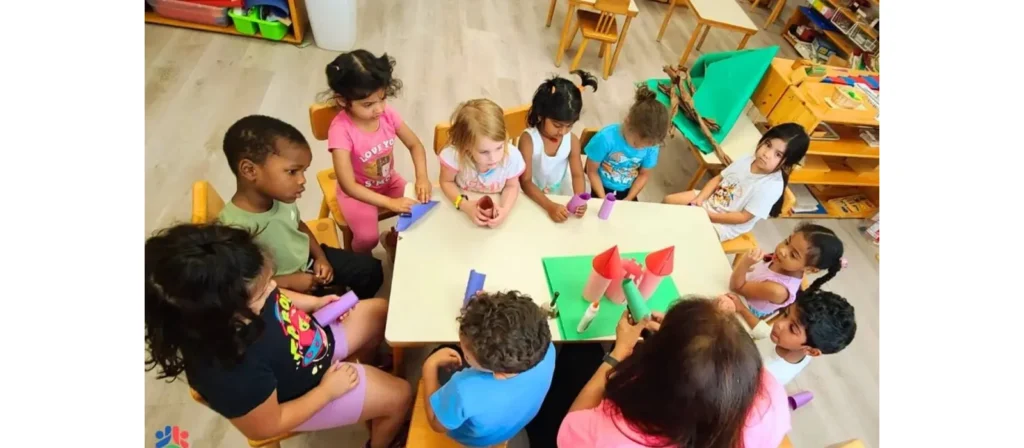
In loose parts play, the adult’s role shifts from directing to facilitating. Children lead the play, but adults support the learning by being present, observant, and responsive. Rather than taking control, the adult’s role is to enrich the experience while allowing children’s ideas to remain central.
Observe Before Intervening
The most powerful support often begins with quiet observation. By watching how children use materials, respond to challenges, and interact with others, adults gain insight into their thinking. This helps them know when to step in and when to simply allow the process to unfold.
Encourage Thinking With Gentle Prompts
Rather than giving instructions, adults can offer open-ended questions that extend the child’s thinking. Phrases like “What do you think will happen if…?” or “How else could you use that?” invite exploration without directing outcomes. The goal is to provoke curiosity, not to lead.
Support Language and Communication
Loose parts play creates opportunities for storytelling, negotiation, and explanation. Adults can help by modeling descriptive language, offering new vocabulary, or reflecting back what children say. These interactions build language skills and give children tools to express complex ideas.
Make Learning Visible Through Documentation
Capturing moments of play through photos, notes, or quotes helps both children and adults reflect on learning. Documentation is not just about assessment; it’s a way to celebrate children’s thinking, support planning, and share insights with families and colleagues.
結論
Loose parts play is a powerful way to support early childhood development through creativity, independence, and hands-on exploration. By offering open ended materials, children are encouraged to think critically, solve problems, and express themselves freely.
This approach does not require expensive tools or complex planning. Instead, it depends on a thoughtfully designed environment, trust in the child’s ideas, and a mindset that values unstructured play as meaningful learning.
Whether indoors or outdoors, loose parts play gives children the freedom to lead their own discoveries. With simple materials and supportive guidance, they build confidence, curiosity, and essential life skills that last well beyond the early years.





 JA
JA  EN
EN  AR
AR  FR
FR  IT
IT  DE
DE  ES
ES  TH
TH  TR
TR