In many classrooms, the science corner starts as a great idea but ends up as a shelf piled with plastic insects, dusty rocks, and other neglected odds and ends. Children rush past it, you only use it a few times a week, and setting it up feels like just another task on an already long to-do list. This is frustrating because you know a preschool science center could be so much more than just a dumping ground for clutter.
When the space is too crowded, too high, or difficult to clean, children simply grab things, throw them around, and move on, instead of truly observing and thinking. Unsafe or inappropriate materials mean you have to constantly supervise the children, adding to the stress rather than providing support. Over time, the area becomes a decoration rather than a real learning space, and children miss out on daily opportunities to develop early causal thinking, language skills, and confidence in real-world science.
The good news is, you don’t need expensive equipment to solve this problem. With the right space in your classroom, child-sized tables and chairs, a few sturdy shelves, and some simple core materials suitable for different age groups, a preschool science center can become a quiet, practical corner that truly supports your daily teaching. This guide will walk you through choosing the right location, furniture, and materials, and ensuring safety, so that children’s curiosity can find a stable and engaging home in your daycare or early education program.
Introduction to Preschool Science Centers
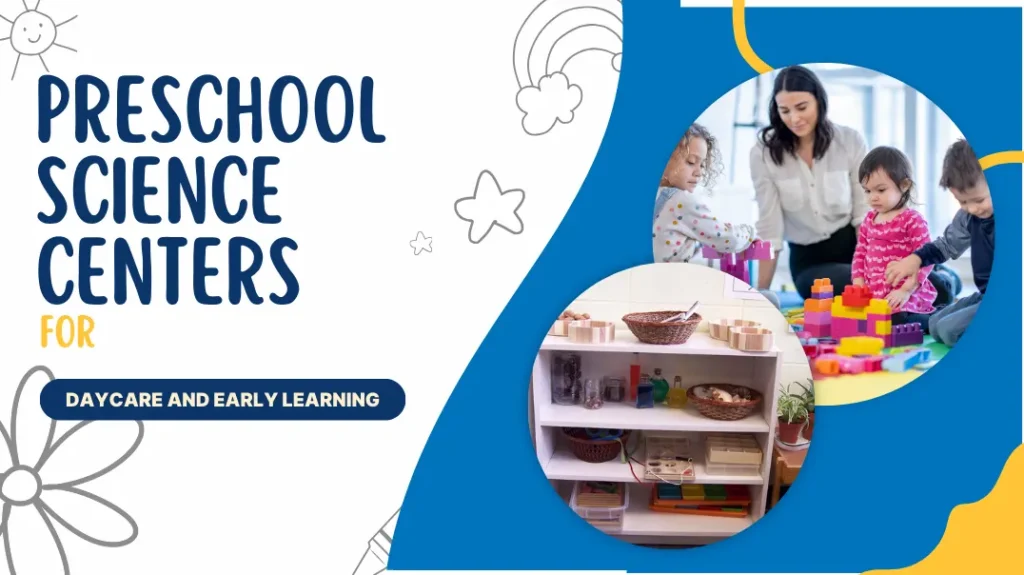
The preschool science center is a small, clearly defined area within the classroom where children can safely touch, observe, compare, and discuss various real-world objects. Examples include seashells, rocks, leaves, magnets, and water, as well as simple tools like magnifying glasses or measuring cups. The goal of the preschool science center is not to impart profound scientific knowledge, but rather to provide young children with a space to observe, share their ideas, and begin developing early thinking habits that they will use for years to come.
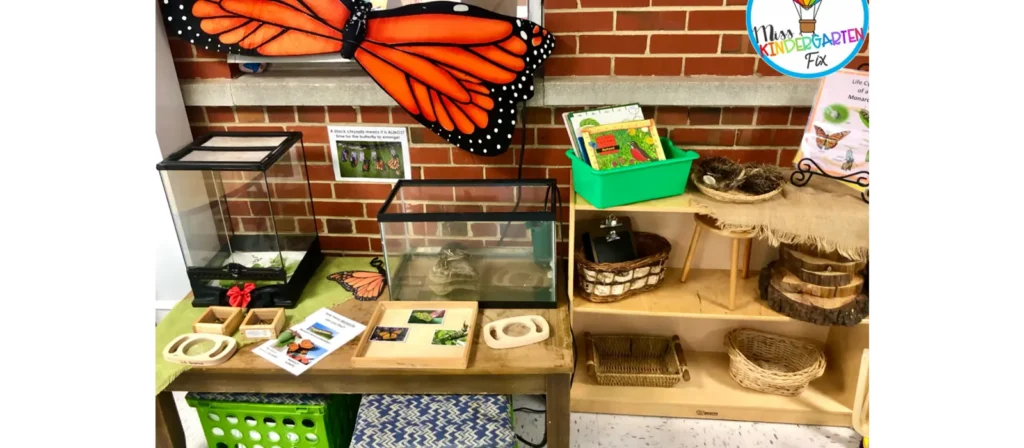
In daycare centers and early education programs, the science center functions like other learning areas: children know where it is, what they can do there, and how to use the materials without constant adult supervision. During free play or small group time, they can sit down, manipulate the materials, chat with friends, and explore at their own pace. For quieter children, this corner is often calmer and more appealing than noisy block play or dramatic play areas.
For teachers and caregivers, the preschool science center acts as a small window into children’s thinking. When you stop to observe, you’ll hear the questions they ask, the words they choose, and the ways they attempt to solve small problems, such as too much water, insufficient light, or two children wanting to use the same magnifying glass. These moments provide valuable clues to help you plan future activities, adjust the curriculum, and connect children’s discoveries in this corner to stories, outdoor play, and other activities throughout the day.
Choosing the Right Location for a Preschool Science Center
Where you place preschool science centers in the room matters just as much as what you put in them. The right spot makes it easy for children to join in, stay focused, and use the materials safely, while you can still keep an eye on what is going on. A little planning here can save you a lot of noise, spills, and arguments later.
Positioning Within the Classroom Layout
Start by looking at how children move through the room across a normal day. A preschool science center usually works best along a wall or in a corner that feels clearly defined but not hidden. You want children to notice it and feel invited in, without it becoming a hallway or dumping zone. Placing the table so chairs face into the room, not into a tight gap, also helps children feel comfortable staying there for more than a quick minute.
Balancing Quiet Focus and Accessibility
The sweet spot is a location that feels calm but still easy to reach. If the preschool science center is tucked so far away that children hardly walk past it, they will forget it exists. If it sits right in the middle of the main traffic path, materials will be bumped and knocked off all day. Aim for a spot that allows two to four children to sit or stand together with enough elbow room, while leaving a clear path for others to pass without brushing the table every few seconds.
Considering Noise Levels and Nearby Areas
Think carefully about what is happening right next to the science corner. Parking it beside loud block play, music, or active movement space will make it harder for children to look closely, talk quietly, and stay with an idea. A better match is to place preschool science centers near calmer areas such as reading, fine motor shelves, or writing materials. That way the mood of the space supports slow looking and gentle conversation instead of constant distraction.
Making Supervision Simple and Safe
Finally, choose a spot where adults can see faces, hands, and materials without twisting around furniture. If the science table is hidden behind tall shelves, you will spend the whole day popping up and down to check what is happening. When preschool science centers sit within your natural line of sight from the main teaching area, you can listen in on children’s ideas, step in quickly if a tool is being used in an unsafe way, and still keep the rest of the room running smoothly.
Planning the Size and Capacity of a Science Center
Getting the size right for preschool science centers is a bit like choosing the right table for family dinner. Too small, and everyone is bumping elbows and knocking cups over. Too large, and the space starts to feel empty, scattered, and hard to supervise. A little careful planning around how many children use the area at once, how they sit or stand, and how they move around the table will keep the science corner calm, comfortable, and actually used.
- Aim for two to four children in the science center at one time so everyone can reach materials and join the conversation.
- Match the number of chairs or floor spots to that limit so the rule feels natural without constant reminders.
- Choose a table size that gives each child a clear personal space instead of one crowded pile of materials in the middle.
- Leave enough room around the table for children to push chairs back, lean, and turn without bumping into others.
- Keep a clear walking path behind the science center so other children and adults can pass without brushing the table.
- Use child sized tables and chairs so eyes are level with materials and feet can rest comfortably for longer focus.
- Plan storage so only a few well chosen trays are out at once, which reduces clutter and helps children stay on one task.
- Watch how your group actually uses the area for a few days and adjust the layout if you see constant squeezing or crowding.
Essential Furniture for a Preschool Science Center
Good furniture can transform a preschool science center from a cluttered mess of shelves into a neat, organized, and engaging learning area. Think of the furniture as a picture frame: it determines how long children will stay, how focused they will be on their work, and how easy it will be for you to tidy up the space at the end of the day.
Science Table
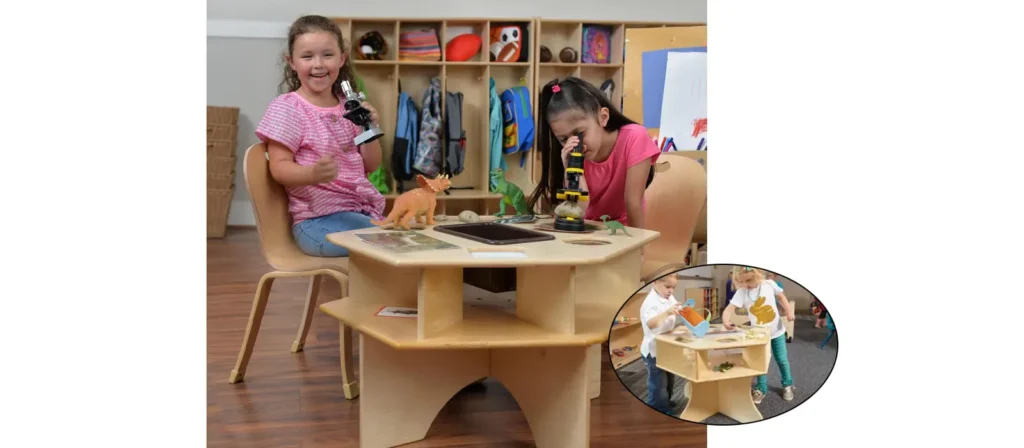
その table is the main stage of the science area. A good child height table lets children rest their elbows on the surface without lifting their shoulders, so they can lean in and really look at small objects. The top should be big enough for a few trays, but not so deep that kids have to stretch dangerously across to reach something. Rounded corners protect little hips and tummies when they squeeze by. A smooth, wipe friendly surface is essential, because there will be water rings, sand, and mystery crumbs by the end of the day. Solid, stable legs matter too, so the table does not wobble when a child leans forward with their full body weight.
Open Shelves
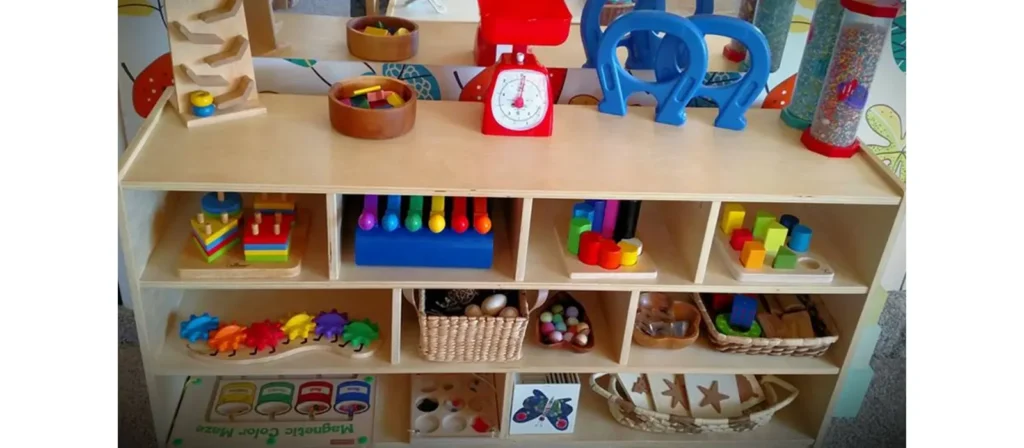
Open shelves act like a quiet helper in your preschool science centers. Low, sturdy shelving lets children see choices at a glance instead of digging through bins. Aim for shelves that sit at or below chest height for your oldest group, so even younger children can point, choose, and put things back without climbing.
A shallow depth is helpful, so items sit in a single row and do not vanish behind other things. When the shelf design is simple and neutral, trays and objects stand out clearly and the whole area feels more intentional and less like random storage.
Display Furniture for Specimens and Materials
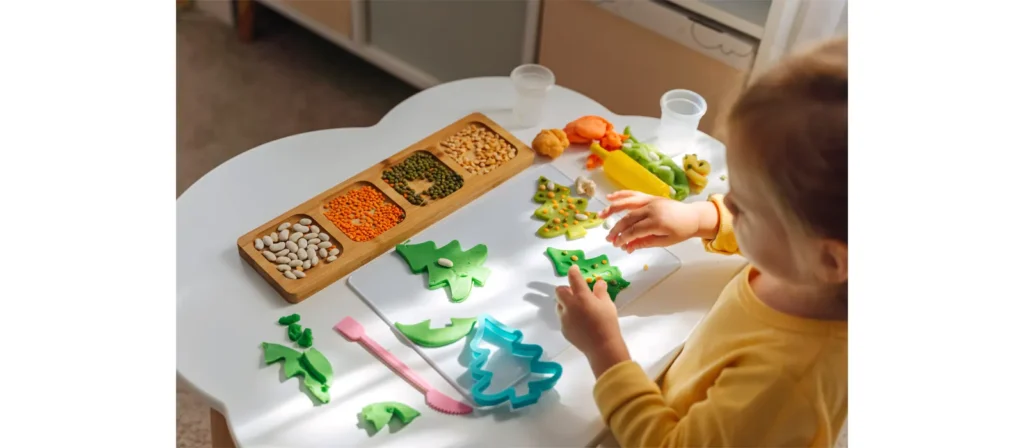
Display furniture gives even the smallest item a sense of importance. A narrow display shelf with several short tiers is ideal, because children can see each object without needing to move five others first. Glass front cabinets are usually not necessary; instead, look for open fronts or low lips that keep items from rolling off while still allowing easy access. Little risers, shallow cubbies, or stepped shelves help a single pinecone or feather stand out so children actually notice it. Wall mounted ledges near the science table can hold photos, simple charts, or child drawings related to the current setup, turning the whole corner into a mini gallery of their thinking.
Kids Chairs
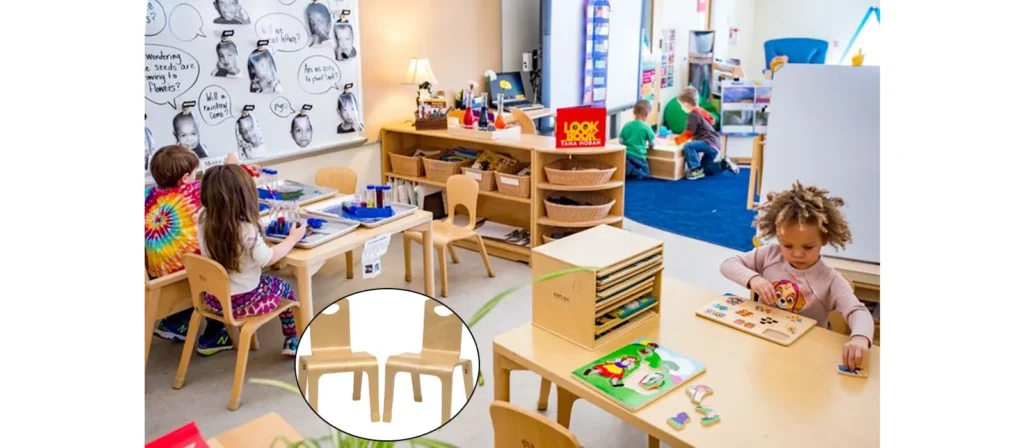
Comfortable chairs help children stay long enough to really think. Child sized chairs should let feet touch the floor or a footrest so bodies feel stable and relaxed. A seat that is too high makes children slide around or kneel, which leads to spills and wiggling.
A seat that is too low makes it hard to see what is on the table. Look for chairs that are light enough for children to move, but solid enough not to tip when they lean sideways to talk with a friend. For very young children, short benches can also work, because adults can slide in next to them without shifting lots of furniture.
収納キャビネット
A storage cabinet near the science area acts as home base for extra trays, backup tools, and seasonal items you do not want out all the time. Choose a cabinet tall enough to hold a few larger bins, but not so tall that it blocks your view across the room.
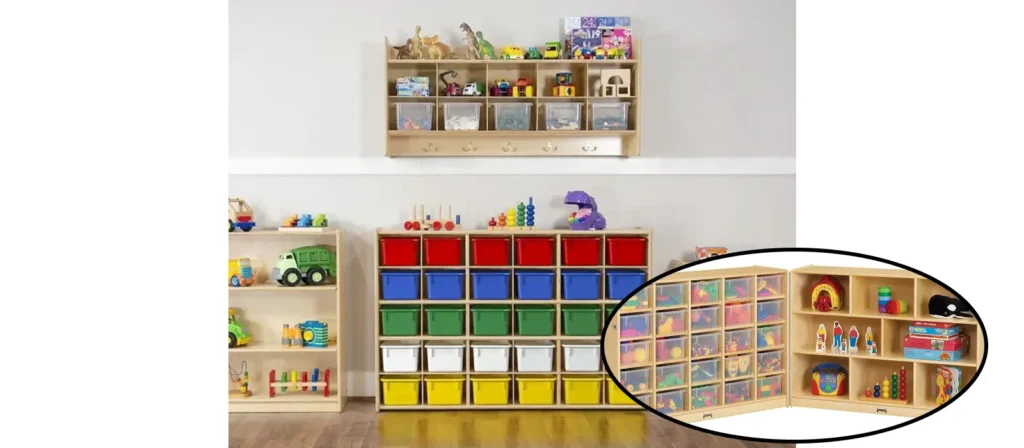
Deeper lower shelves can hold bulky items like water tubs, while upper shelves or drawers can store small parts that only come out with close supervision. Smooth drawers with clear fronts or labels help you grab what you need quickly when a child suddenly becomes interested in magnifiers or seed sorting.
By keeping overflow supplies in one clear, sturdy piece of furniture, you stop the main preschool science centers from turning into a crowded storage corner.
Core Materials Every Preschool Science Center Should Include
Preschool science centers work best when the materials are simple, real, and easy for small hands to use. You do not need fancy kits. A small set of well chosen items can already help children look closely, compare, and talk about what they see. The ideas below group similar tools together so your list stays short and practical.
- Observation Tools
A few sturdy magnifiers, simple plastic lenses, and flat, shatter resistant mirrors so children can notice tiny details and reflections. - Measuring Tools
Basic balance scales or bucket scales, sand timers or short digital timers, plus measuring cups and spoons for talking about heavy, light, more, and less. - Clear Containers and Trays
Transparent jars, plastic cups, and shallow trays so children can hold water, sand, soil, or small objects and still see what is happening inside. - Natural Objects
A clean, rotating mix of rocks, shells, leaves, pinecones, seeds, bark, feathers, and a few easy care potted plants to bring the outdoor world into the classroom. - Everyday Household Items
Safe real world pieces like bottle caps, cardboard tubes, small boxes, clean sponges, and cloth for sorting, testing, and simple cause and effect play. - Forces and Motion Materials
Short ramps made from sturdy boards or tracks, small balls or cars, and a few child safe magnets with a mix of metal and non metal objects. - Recording and Picture Supports
Light clipboards with plain paper, chunky pencils, and a small set of real photo cards or picture labels that match the materials and support language.
The Difference Between Science Centers and Other Learning Areas
In the bustling classroom, many corners may seem similar at first glance, but the preschool science activity area plays a special role. While activities like building blocks, art, reading corners, and role-playing focus more on storytelling, construction, or imaginative play, the science activity area quietly focuses on careful observation, exploring cause and effect, and interacting with real-world objects. Children still play and chat, but the main purpose is to observe changes, test simple ideas, and discuss what they think is happening.
| Area | Main Focus | Typical Materials | How Children Use It |
|---|---|---|---|
| Science Center | Real changes and thinking | Rocks, leaves, magnets, water | Look closely, compare, try small actions |
| Block Area | Construction and design | Blocks, figures, ramps | Build, stack, knock down, rebuild |
| Art Area | Expression and creativity | Paint, crayons, collage pieces | Create images, mix, cut, glue |
| 劇遊びコーナー | Imagination and social play | Costumes, toy food, props | Act out roles, talk, negotiate |
| Reading / Library Corner | Stories and language | Picture books, story props | Listen, look at pictures, retell stories |
When you see the classroom this way, the science center stops being “just another shelf” and becomes the place where children slow down, use careful eyes and hands, and share their own ideas about real objects. It works alongside other areas, but adds a unique layer: gentle, everyday science thinking that fits naturally into daycare life.
Why Daycare and Early Learning Programs Need a Dedicated Science Center
A dedicated corner for preschool science centers tells children that careful looking, touching, and questioning are part of everyday life, not a rare special activity. Instead of squeezing a few science items onto an overcrowded shelf, you are giving curiosity a steady home in your daycare or early learning classroom. That small decision shapes how children see learning itself.

Encouraging Observation and Inquiry
When you give preschool science centers their own clear space, you send a quiet message to children that their questions matter. A defined area lets kids slow down, stare at a snail shell for a long time, hold a magnet over different objects, and ask why some items stick while others do not. This steady habit of looking closely and speaking up becomes the foundation of real inquiry long before anyone talks about formal science lessons.
Supporting Hands On and Real World Learning
Young children learn with their whole bodies, not just their ears. A science center filled with real objects such as water, stones, seeds, soil, feathers, light and shadow turns ideas into something they can actually touch. Instead of only hearing that some things float, children push items into a water tray and see for themselves. This kind of hands on and real world learning stays with them because it connects directly to what they notice outdoors, from puddles and sand to leaves and clouds.
Helping Children Build Early Cause and Effect Understanding
A well planned preschool science center quietly trains children to think in terms of if I do this, then that happens. Pour more water and the line in the container rises. Tilt the ramp and the car moves faster. Shade the plant and the leaves change over time. These small, repeated moments help children understand cause and effect long before formal experiments appear in textbooks. As they test ideas on purpose and adjust what they are doing, they gain confidence in saying what they think will happen next, which is a powerful step in early problem solving.
Safety and Material Selection Considerations
Safety is the part that either lets your preschool science centers run smoothly or turns them into a constant headache. The goal is simple. Children should be able to use real tools and real objects with real interest, while you feel confident that the setup is safe, clean, and doable in everyday daycare life.
Choosing Age Appropriate Tools and Objects
Start by matching tools to the youngest children who will use the area. Chunky magnifiers, large droppers, and big shells are easier to hold and less likely to break. Avoid sharp metal edges, glass containers, and anything that shatters if it falls off the table. Natural items like rocks or pinecones should be large enough that they cannot be swallowed and smooth enough not to cut small fingers. If an object makes you think twice, set it aside for older children or use it only in a closely guided small group.
Selecting Durable and Easy to Clean Materials
Daycare science areas see a lot of action. Choose materials that can handle drops, spills, and wiping several times a day. Plastic jars, trays, and cups are usually better than glass. Solid wooden pieces with smooth finishes last longer than thin cardboard that curls after one wet session. Fabrics should either be washable or used in ways that keep them fairly dry. When you can rinse, wipe, and reset the area in a few minutes, you are much more likely to keep preschool science centers in daily use instead of saving them for special days.
Managing Small Parts and Supervision Needs
Small parts are not automatically off limits, but they do need a plan. For groups with children under three, keep tiny items such as beads, small seeds, and mini buttons in a labeled teacher drawer and bring them out only when you can sit right beside the group. For older preschool or early elementary children, use trays or shallow containers so small items stay together and are easier to count at cleanup. Clear rules help as well. Items stay on the table, tools are for hands not mouths, and any broken piece goes straight to an adult. This kind of structure lets children enjoy real materials while you stay on top of safety.
Science Center Setup for Different Age Groups
As children grow, the way they use preschool science centers changes. Toddlers need big, sturdy items and lots of simple repetition. Preschool age children are ready for more tools and longer talks. Early elementary children can handle more steps, simple notes, and basic comparisons. Adjusting the setup for each age group keeps the space useful instead of frustrating.
Science Centers for Toddlers
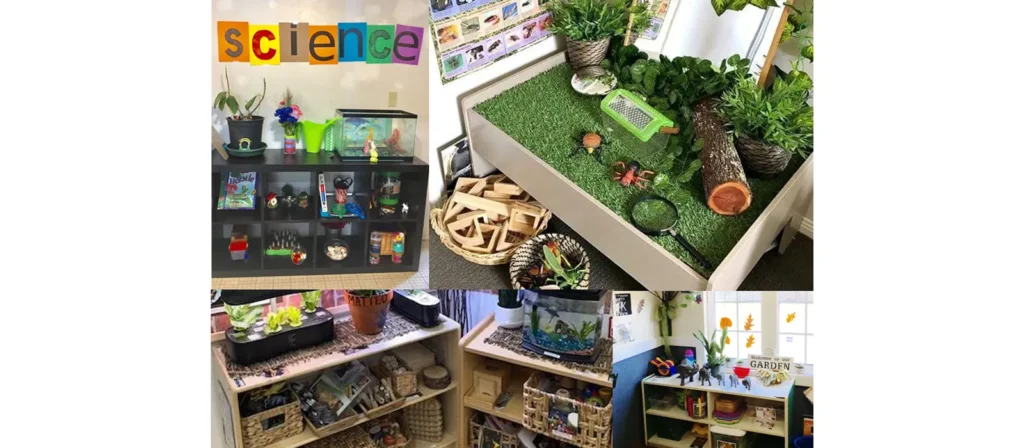
For toddlers, keep the science area low, simple, and very safe. Use floor level trays, short tables, and wide, steady containers with plenty of room for water, sand, and large natural items. Tools should be chunky and easy to grip such as big scoops, cups, and sturdy magnifiers. Plan for short visits, lots of movement, and plenty of wiping. A few well chosen items are better than a crowded shelf so young children can focus on pouring, filling, emptying, and looking without constant redirection.
Science Centers for Preschool Age Children
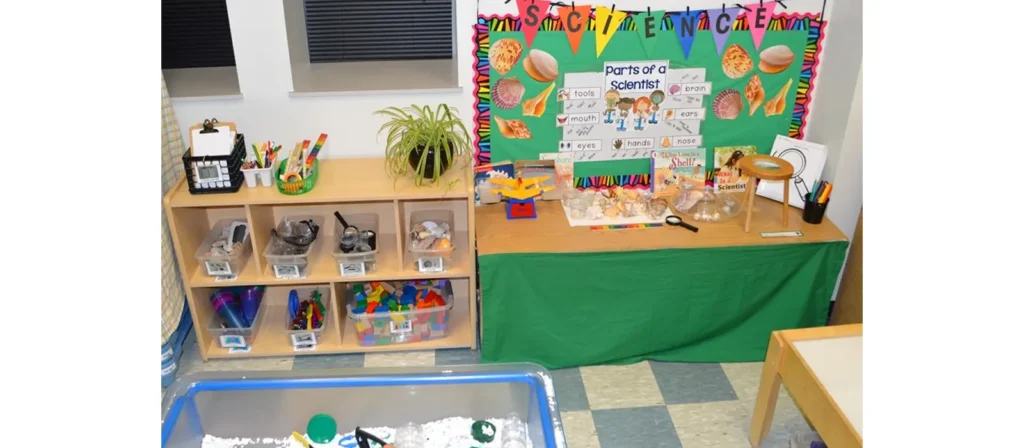
Preschool age children are ready for a bit more challenge. Tables can be slightly higher, with child sized chairs that let feet touch the floor. You can add simple scales, magnets, ramps, and more varied natural collections, as long as pieces are still a safe size. Labels with simple words and pictures help them begin to match language to what they are doing. At this age, children enjoy working in pairs or small groups, talking through what they see, and trying tiny changes such as more water or a different object, so leave space for two to four children to share.
Science Centers for Early Elementary Programs
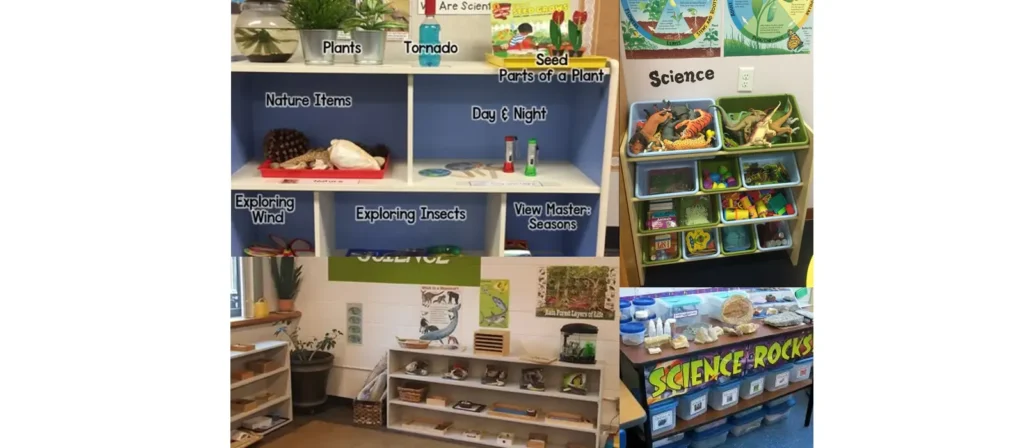
Early elementary children can handle more steps and more responsibility in the science corner. You can include clipboards, simple charts, rulers, and slightly more delicate tools as long as you model how to use and store them. Materials can support simple comparisons and patterns such as heavier or lighter, longer or shorter, faster or slower. Children at this stage can help set up and clean up the area, sort items into categories, and make quick sketches or notes about what happened. The feel of the space is still hands on and playful, but the tasks start to connect more directly to early school science skills.
Common Preschool Science Center Mistakes
Many teachers set up preschool science centers with good intentions but run into the same few problems. One common issue is putting out too many materials at once. When the table and shelves are packed tight, children grab and drop instead of looking closely. A smaller number of clear, inviting choices helps them stay with one idea long enough to really notice what is happening.
A third problem is choosing materials that are hard to clean or maintain. Fragile glass jars, fabric that stays damp, and tiny loose pieces that scatter into every corner will wear you out. Over time, adults stop setting up the area because it feels like too much work. By choosing durable, easy to wipe items and keeping a simple cleaning plan nearby, you can avoid this trap and keep your science center active, safe, and low stress.
Planning Ahead for Your Science Center
Planning ahead keeps preschool science centers useful year after year instead of feeling like a one time project. Start by linking the corner to your curriculum or learning goals. If you know you will focus on seasons, water play, or simple machines through the year, you can choose furniture, storage, and basic tools that support those themes without needing to buy new items every month. This also helps you say yes or no when people offer random donations that do not really fit.
Think long term about storage and rotation. A small teacher cabinet or labeled bins in a closet lets you keep extra materials organized by topic or season. That way you can swap in fresh items every few weeks while reusing the same sturdy trays, jars, and tools. It is also smart to budget a little time and money each term for replacing broken pieces, adding one new tool, or printing fresh photo cards so the science center feels alive but still manageable.
Finally, design the space so it can grow with your group. Choose flexible furniture that works for toddlers now and preschool age children later, or that can shift from water play to magnets without a full rearrange. When you think about how your program might change in the next two or three years, you can make choices that keep your preschool science centers steady even as children and staff move on.





 JA
JA  EN
EN  AR
AR  FR
FR  IT
IT  DE
DE  ES
ES  TH
TH  TR
TR